

Dry Mouth Causes Bad Breath
Why Your Mouth Feels Dry and Your Breath Still Doesn’t Feel Fresh
Dry Mouth Causes Bad Breath: A lot of people assume unpleasant breath always comes from poor brushing habits.
So they brush longer, buy stronger mouthwash, carry mints everywhere, and still end up wondering why the smell keeps returning a few hours later.
In many cases, the issue is not simply cleanliness. The mouth itself may be too dry.
That dryness is often subtle at first. Some people only notice it in the morning. Others feel it after coffee, long work meetings, stress, or sleeping with their mouth open. The tongue starts feeling rough, sticky, or heavily coated even though brushing habits have not really changed.
What many people do not realize is that saliva quietly does a huge amount of work throughout the day.
It helps rinse away food particles, balance bacteria, and keep the tissues inside the mouth more comfortable. When saliva flow decreases, odor tends to build more easily, especially around the tongue and gums.
That is why some people continue struggling with lingering mouth odor even while brushing regularly.
Dry Mouth Causes Bad Breath: Why a Dry Mouth Changes Breath So Quickly
A healthy mouth constantly cleans itself.
Every time you swallow, saliva helps clear away bacteria and leftover debris before they sit too long inside the mouth. When that moisture decreases, the balance changes surprisingly fast.
Bacteria begin lingering longer on the tongue surface, particularly toward the back where buildup naturally collects more easily.
Over time, this can lead to:
- thicker tongue coating,
- sticky saliva,
- sour or stale breath,
- unpleasant taste in the morning,
- or a mouth that never fully feels refreshed.
Many people notice the problem becoming worse:
- after waking up,
- during fasting,
- after drinking alcohol,
- after several cups of coffee,
- or during stressful periods with poor sleep.
The tongue usually becomes one of the first places where these changes are noticeable.
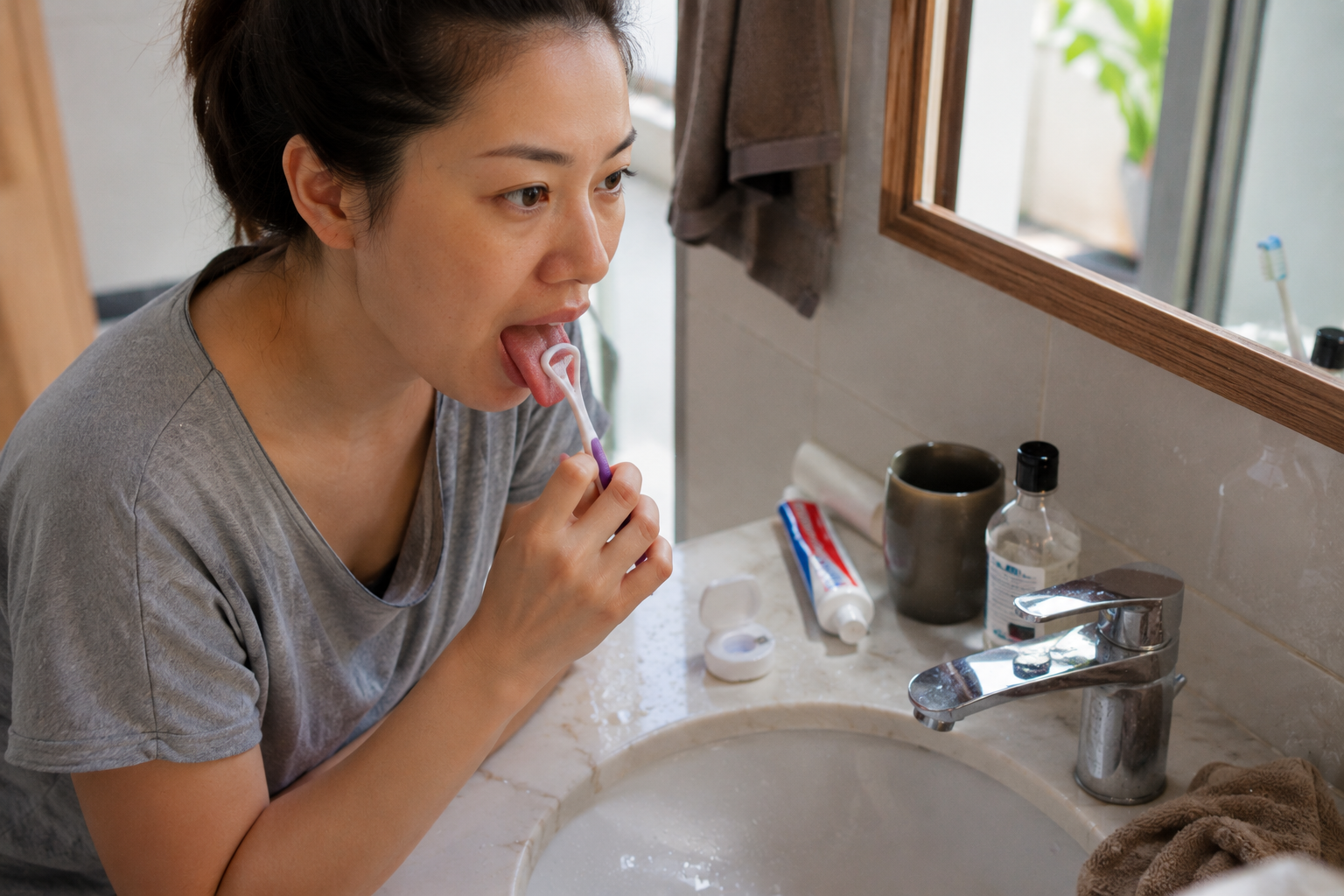
For people dealing with recurring tongue coating or buildup, gentle tongue cleaning may help reduce odor-causing residue without irritating the mouth further.
How to Clean Your Tongue Properly
Some Everyday Habits Can Quietly Make the Problem Worse
Many people think oral dryness only happens because they forgot to drink enough water.
In reality, several smaller habits often work together.
Sleeping With the Mouth Open
This is extremely common.
People who snore or deal with nasal congestion often wake up with:
- dry lips,
- rough tongue texture,
- sticky saliva,
- or strong morning breath that takes time to improve.
Sometimes the smell fades later in the day once saliva flow becomes more active again.
Too Much Coffee Without Enough Water
A lot of people notice their mouth feeling different after multiple cups of coffee.
The breath may become heavier, the tongue feels coated faster, and the mouth starts feeling slightly dry or warm. Coffee alone is not always the direct cause, but it can contribute to an environment where odor builds more easily.

Stress and Anxiety
Stress affects the mouth more than people expect.
Some individuals unconsciously breathe through the mouth during anxious periods. Others notice dryness before meetings, social situations, or periods of poor sleep.
That combination of stress, low saliva flow, and interrupted sleep can noticeably affect breath freshness.
Medications
Dryness inside the mouth is a known side effect of many common medications, including:
- antihistamines,
- allergy medication,
- antidepressants,
- sleep aids,
- and some blood pressure medications.
In some cases, the change happens gradually enough that people do not connect it to medication use right away.
Smoking
Smoking changes the overall environment inside the mouth.
The tissues become drier, bacteria tend to accumulate more easily, and odor can linger even after brushing.
Dry Mouth Causes Bad Breath: Why Strong Mouthwash Is Not Always the Answer
A very common reaction to persistent odor is using stronger and stronger mouthwash.
The problem is that temporary freshness and long-term improvement are not always the same thing.
Some alcohol-based rinses create a strong mint sensation for a short time but may leave the mouth feeling even drier afterward. Then the odor gradually returns once the cooling effect fades.
That is why people sometimes feel trapped in a cycle of:
- rinse,
- temporary freshness,
- dryness,
- then odor returning again.
Long-term improvement usually depends more on:
- saliva support,
- hydration,
- tongue hygiene,
- and gum health consistency.
The Gums Often Become Part of the Problem Too
When moisture levels stay low for long periods, plaque tends to build more easily near the gumline.
Some people begin noticing:
- tenderness,
- bleeding while brushing,
- puffiness,
- or a strange taste near the gums.
Those areas can also trap bacteria and contribute to lingering odor throughout the day.
Improving gum health habits often helps the mouth feel cleaner overall, not just temporarily fresher after brushing.
How to Improve Gum Health
Why the Smell Sometimes Returns Right After Brushing
This is one of the most frustrating parts for many people.
You brush carefully. Maybe you floss too. For a short time everything feels cleaner — then the odor slowly returns again.
Usually that means the underlying environment inside the mouth has not changed much.
If the tongue remains coated and saliva flow stays low, bacteria can rebuild surprisingly quickly even after brushing.
People often notice this pattern:
- after waking up,
- after coffee,
- during fasting,
- after long conversations,
- or during stressful periods.
That is why brushing harder does not always solve the issue.
Why My Breath Smells After Brushing
What Usually Helps Most Over Time – Dry Mouth Causes Bad Breath
There is rarely one dramatic fix.
Most people who notice real improvement tend to make several smaller changes consistently rather than relying on a single product.
Drink Water Earlier and More Consistently
Many people wait until their mouth already feels dry.
Smaller amounts throughout the day often work better than suddenly drinking large amounts at once.
Clean the Tongue Gently
The back of the tongue tends to collect the most buildup.
Gentle cleaning once or twice daily is usually enough. Scraping too aggressively may irritate the tongue and make dryness feel worse.
Improve Nighttime Breathing
Reducing nasal congestion or improving sleep quality sometimes helps more than people expect.
Even small improvements in nighttime breathing can affect how the mouth feels the next morning.
Pay Attention to Daily Patterns
For many people, the issue is not one single cause.
Coffee, dehydration, stress, smoking, poor sleep, and mouth breathing often work together gradually over time.
Recognizing those patterns honestly is usually more helpful than searching for one miracle solution.
Supportive Oral Care Approaches
Some people prefer gentler oral care approaches that focus more on gum comfort and bacterial balance rather than overpowering mint sensation alone.
Related guides:
Still, daily habits usually matter more long term than short bursts of freshness.
When Persistent Dryness Should Be Checked
Occasional dryness after sleep or dehydration is common.
But if the mouth frequently feels dry alongside:
- recurring odor,
- mouth sores,
- gum bleeding,
- difficulty swallowing,
- burning sensations,
- or thick tongue coating,
it may be worth discussing with a dentist or healthcare professional.
Sometimes persistent dryness is connected to medications, sleep issues, sinus problems, reflux, or other health conditions that require more attention.
FAQ – Dry Mouth Causes Bad Breath
Why does my mouth feel dry even after drinking water?
Sometimes hydration alone is not the only factor. Stress, mouth breathing, medications, smoking, and poor sleep can also affect saliva flow.
Can a coated tongue affect breath quality?
Yes. Bacteria and debris tend to collect on the tongue surface, especially when saliva levels are lower than normal.
Why is morning breath sometimes much worse?
Saliva production naturally decreases during sleep. Snoring, mouth breathing, and dehydration can make odor more noticeable after waking up.
Does stress affect mouth freshness?
It can. Stress may contribute to mouth breathing, lower saliva flow, and disrupted sleep patterns that affect overall oral comfort.
Can gum irritation contribute to lingering odor?
Yes. Inflamed gums and plaque buildup may create areas where bacteria accumulate more easily.
Reference
- American Dental Association (ADA) — Dry Mouth Information
- Mayo Clinic — Dry Mouth Causes and Treatments
- Cleveland Clinic — Halitosis and Oral Health
About the Author — Bad Breath Treatment Editorial Team
The Bad Breath Treatment Editorial Team researches common causes of lingering mouth odor, tongue coating, oral dryness, gum irritation, and everyday oral hygiene habits. Content is developed using clinical references, oral health research, and practical observations commonly experienced in daily life.
The editorial approach focuses on creating educational content that feels realistic, balanced, and genuinely useful rather than overly promotional or exaggerated.
Disclaimer
This content is intended for informational and educational purposes only and should not be considered medical advice. Persistent oral dryness, gum problems, or ongoing breath concerns should be evaluated by a qualified dentist or healthcare professional. Always seek professional guidance regarding ongoing symptoms or health concerns.
5 Comments