

How to Stop Bad Breath Naturally
How to Stop Bad Breath Naturally Without Overcomplicating Your Oral Care Routine
How to Stop Bad Breath Naturally: Bad breath is one of those problems people rarely talk about directly.
Most people notice it quietly:
- after waking up
- during conversations
- behind a face mask
- after coffee
- or when brushing somehow does not seem to help much anymore
Sometimes the smell disappears quickly after brushing.
Sometimes it returns within an hour.
And sometimes people become stuck in a cycle of:
- stronger toothpaste
- stronger mouthwash
- more gum
- more brushing
without really understanding what is causing the odor in the first place.
The truth is, bad breath is often less about “dirty teeth” and more about the overall environment inside the mouth.
For many people, improving bad breath naturally comes down to a combination of:
- tongue hygiene
- hydration
- gum care
- saliva flow
- consistent cleaning habits
- lifestyle patterns
—not extreme products or aggressive routines.
Bad Breath Usually Has More Than One Cause
This is something a lot of people overlook.
Bad breath rarely comes from only one thing.
Someone may brush regularly but still have:
- dry mouth
- tongue coating
- gum inflammation
- plaque buildup
- tartar near the gumline
- bacteria between teeth
And sometimes daily habits contribute more than people realize.
For example:
- heavy coffee intake
- smoking
- low water intake
- skipping meals
- mouth breathing during sleep
can all affect how the mouth smells throughout the day.
According to the Mayo Clinic, poor oral hygiene, dry mouth, tongue bacteria, and certain foods are among the common contributors to bad breath.
Mayo Clinic – Bad Breath Causes and Treatment
Start With the Tongue, Not Just the Teeth
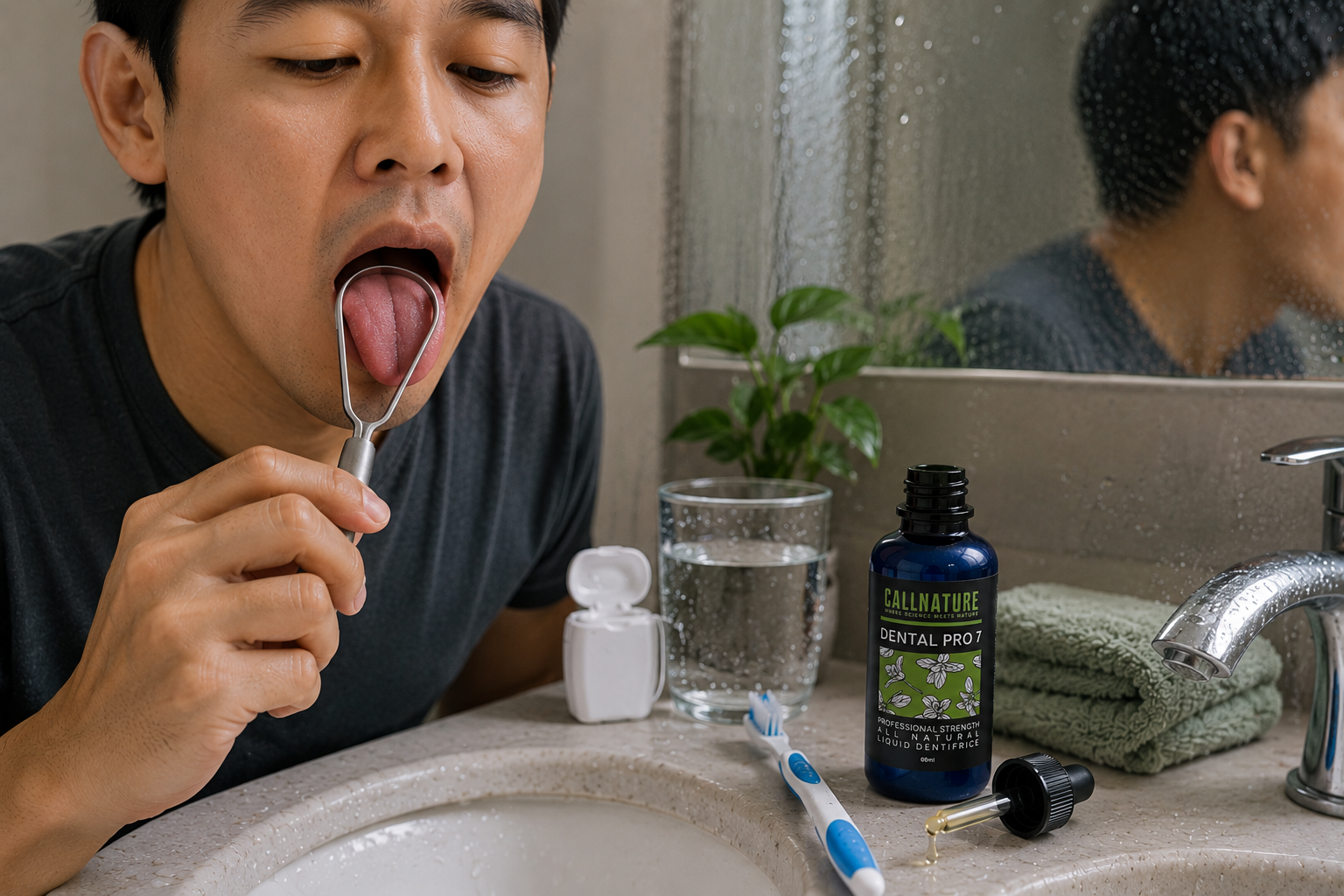
A surprising number of people focus entirely on brushing their teeth while barely cleaning their tongue.
But the tongue naturally traps:
- bacteria
- food particles
- dry saliva
- debris
especially toward the back surface.
This buildup can create odor even when the teeth themselves feel clean.
Some people only notice this after seeing a coated tongue under bright bathroom lighting in the morning.
That does not automatically mean something serious is wrong, but it often explains why brushing alone is not enough.
Gentle Cleaning Usually Works Better
One mistake people make is becoming overly aggressive once they start tongue cleaning.
The goal is not to scrape the tongue until it becomes painfully pink.
Usually:
- gentle cleaning
- once daily
- soft pressure
- consistency
works better long-term.
You can read more here:
How to Clean Your Tongue Properly
Dry Mouth Often Makes Bad Breath Worse
Many people notice stronger bad breath:
- immediately after waking up
- during long workdays
- after coffee
- while fasting
- during dehydration
This happens because saliva helps regulate bacteria naturally inside the mouth.
When the mouth stays dry for long periods, odor-causing bacteria can grow more easily.
Some people spend years changing toothpaste brands when the real issue is simply chronic dry mouth.
Small Habits Can Make a Bigger Difference Than Expected
For some people, fresher breath improves noticeably after:
- drinking water more consistently
- reducing smoking
- improving nighttime breathing
- limiting excessive caffeine
- avoiding sugary drinks all day
These changes sound simple, but oral hygiene is often about small repeated habits rather than dramatic solutions.
More on this here:
Dry Mouth Causes Bad Breath
Gum Health Matters More Than Many People Realize
People often associate bad breath only with the tongue.
But gum health can affect breath too.
Plaque tends to collect:
- near the gumline
- between teeth
- around areas that are difficult to clean properly
Over time, this may contribute to:
- gum irritation
- bleeding
- inflammation
- unpleasant odor
Some people brush thoroughly while almost never flossing consistently.
Others brush harder instead of cleaning more carefully.
Aggressive Brushing Is Not the Same as Better Cleaning
This is important.
A lot of people react to bad breath by brushing harder and longer.
But dentists often recommend:
- gentle brushing
- careful gumline cleaning
- consistent flossing
- realistic daily habits
rather than aggressive scrubbing.
You can also read:
How to Improve Gum Health
Mouthwash Helps Some People — But It Usually Isn’t the Full Solution
Minty breath and genuinely cleaner breath are not always the same thing.
Some mouthwashes temporarily mask odor very well.
Then the smell comes back shortly afterward.
This usually happens because the underlying cause remains:
- tongue bacteria
- dry mouth
- plaque buildup
- tartar
- gum inflammation
A lot of people end up chasing stronger and stronger mouthwash instead of improving the overall oral environment.
Diet and Daily Habits Affect Breath More Than People Think
This part often surprises people.
Bad breath is not always caused purely by poor brushing.
Some everyday contributors include:
- coffee
- smoking
- alcohol
- dehydration
- garlic and onions
- low-carb dieting
- skipping meals
- sleeping with an open mouth
Sometimes people become overly focused on products while overlooking habits that affect the mouth all day long.
Natural Oral Care Support Works Best Alongside Consistent Habits
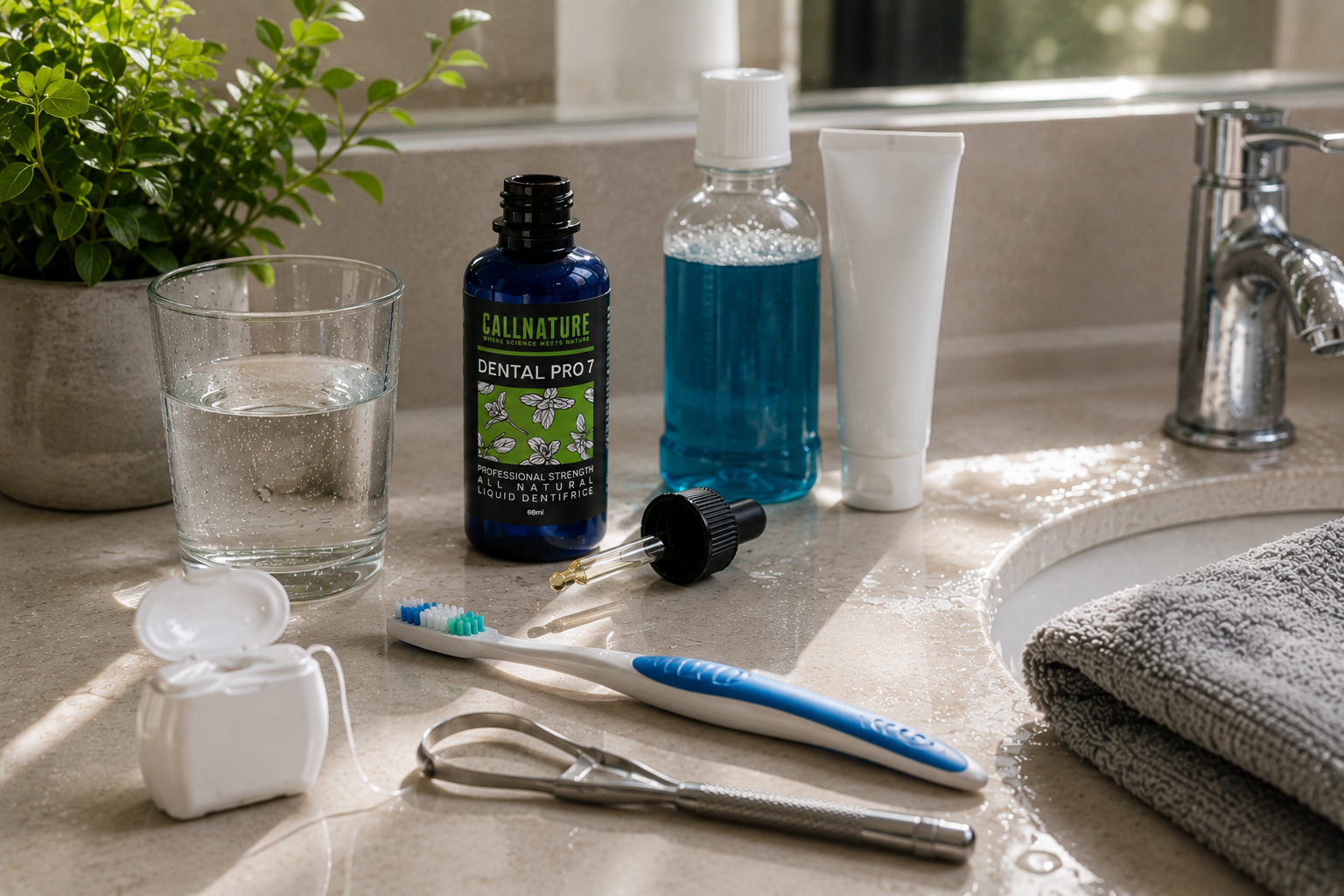
Some oral care products may help support fresher breath when combined with:
- brushing
- flossing
- tongue cleaning
- hydration
- gum care
- regular dental hygiene
But no product replaces consistent habits completely.
People researching additional oral care support can also read:
The most realistic approach is usually gradual improvement rather than expecting instant overnight changes.
Sometimes Persistent Bad Breath Needs Professional Attention
Occasional bad breath is extremely common.
But persistent odor that does not improve may sometimes involve:
- gum disease
- significant tartar buildup
- untreated dental issues
- chronic dry mouth
- other oral health conditions
Consider professional evaluation if you notice:
- bleeding gums
- gum pain
- loose teeth
- persistent unpleasant taste
- ongoing odor despite oral hygiene efforts
Sometimes what feels like “normal bad breath” may actually signal something deeper.
Final Thoughts
A lot of people overcomplicate bad breath.
They search endlessly for:
- stronger products
- harsher mouthwash
- miracle solutions
- instant fixes
when the biggest improvements often come from: cleaning the tongue gently, flossing consistently, improving hydration, supporting gum health, reducing dryness, maintaining realistic daily routines
Medical Disclaimer
The information in this article is intended for educational and informational purposes only and should not be considered medical advice, diagnosis, or treatment.
Persistent bad breath, gum pain, swelling, dry mouth, bleeding, or unusual oral symptoms should be evaluated by a licensed dentist or qualified healthcare professional.
This website does not provide personalized dental care recommendations or medical diagnosis.
About the Author: Bad Breath Treatment Editorial Team
The Bad Breath Treatment Editorial Team publishes educational content focused on practical oral hygiene topics including bad breath, gum care, tongue cleaning, plaque buildup, dry mouth, and realistic daily oral care habits.
Our goal is to make oral care information easier to understand through balanced, research-informed, and reader-friendly educational content written for everyday readers rather than dental professionals.
We focus on practical routines, preventive habits, and realistic oral hygiene guidance instead of exaggerated “instant cure” claims or fear-based marketing.
Frequently Asked Questions
What naturally helps reduce bad breath?
Consistent brushing, flossing, tongue cleaning, hydration, and gum care may all help support fresher breath naturally over time.
Can dehydration cause bad breath?
Yes. A dry mouth environment allows odor-causing bacteria to grow more easily, which may worsen breath smell.
Is tongue cleaning really important for bad breath?
For many people, yes. The tongue can trap bacteria and debris that contribute to odor, especially toward the back surface.
Why does bad breath return quickly after brushing?
Brushing mainly cleans the teeth. Bad breath may still come from tongue bacteria, dry mouth, plaque buildup, gum problems, or tartar.
Can gum problems make breath smell worse?
Yes. Plaque buildup and gum inflammation may contribute to unpleasant odor if not cleaned properly.
When should I see a dentist for bad breath?
Consider professional evaluation if bad breath persists despite good oral hygiene or if it is accompanied by gum pain, bleeding, swelling, or tartar buildup.

7 Comments