
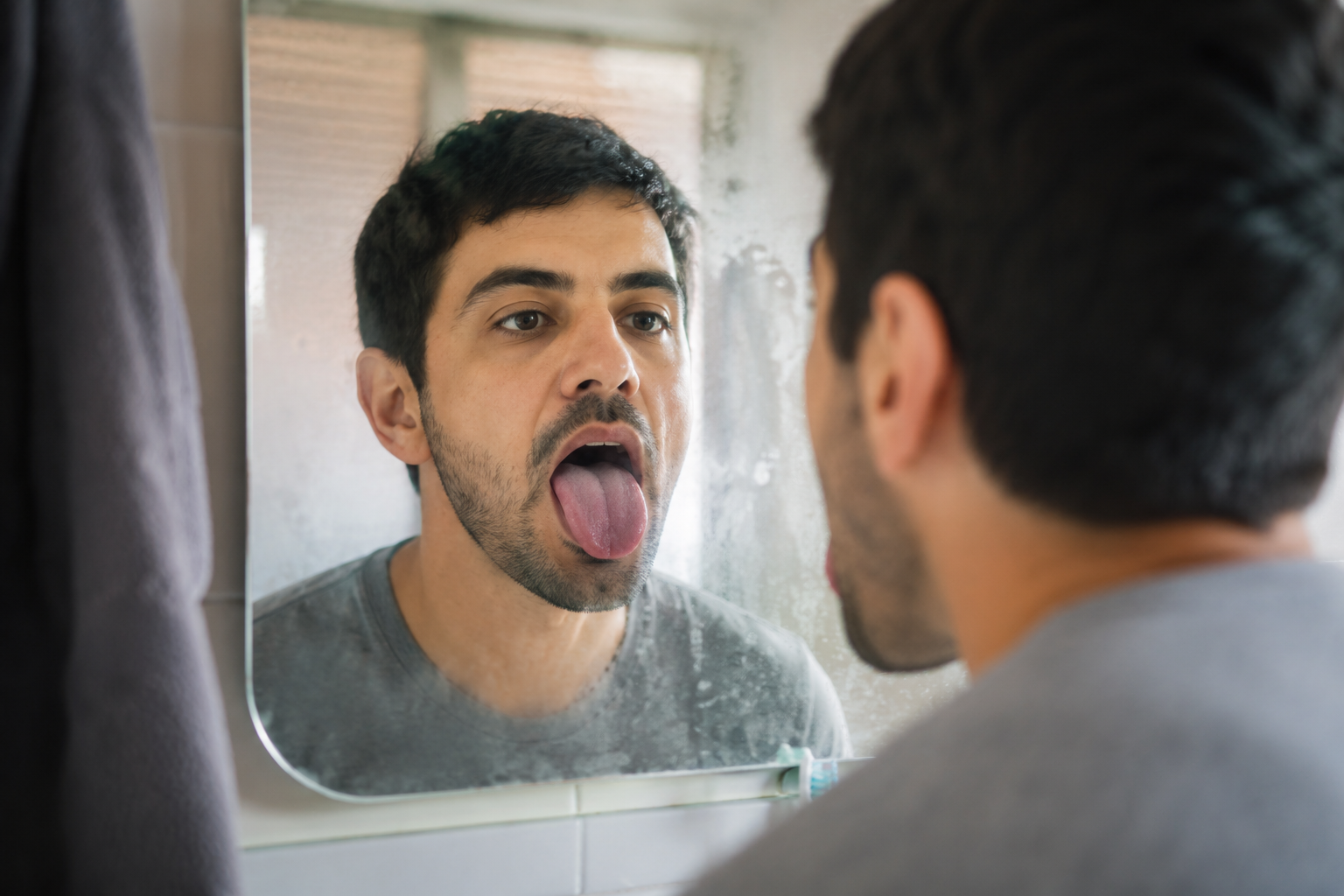
How to Clean Your Tongue Properly
How to Clean Your Tongue Properly (Without Scrubbing Too Aggressively)
How to Clean Your Tongue Properly: A lot of people brush their teeth every day without thinking much about their tongue.
Then one morning, usually under bright bathroom lighting, they notice a white coating, strange taste, or breath that still feels unpleasant even after brushing.
That moment is surprisingly common.
The tongue naturally collects bacteria, food debris, dry saliva residue, and other buildup throughout the day — especially toward the back surface where regular brushing often misses completely.
Some people become overly focused on making their tongue look perfectly pink after seeing edited dental advertisements online. In reality, healthy tongues are not always spotless.
The goal of tongue cleaning is not perfection.
It is simply reducing excess buildup comfortably and supporting better overall oral hygiene without turning the process into an aggressive routine.
Why the Tongue Affects Breath More Than People Expect
Many people think bad breath mainly comes from the teeth.
Sometimes it does. But the tongue often plays a role too.
The surface of the tongue contains tiny grooves and textured areas where bacteria can collect surprisingly easily. Over time, this buildup may contribute to:
- unpleasant breath
- sour taste
- dry mouth feeling
- coated tongue appearance
This becomes even more noticeable in people who:
- drink a lot of coffee
- smoke
- sleep with their mouth open
- don’t stay hydrated consistently
- skip flossing regularly
Morning breath tends to make people notice the tongue more than they normally would.
Some people describe it as a “thick” or “sticky” feeling in the mouth after waking up.
According to the Mayo Clinic, bacteria on the tongue are one of the common contributors to bad breath.
Mayo Clinic – Bad Breath Causes and Treatment
A Healthy Tongue Does Not Need to Look Perfect
This is something many people misunderstand.
Online oral care content often shows unrealistically pink tongues under heavily edited lighting, which can make normal tongues appear unhealthy by comparison.
But in real life, a healthy tongue may still have: mild coating in the morning, uneven texture, slight discoloration, natural moisture variations. A small amount of coating is not automatically a problem.
In fact, some people damage their tongue simply because they keep trying to “scrape everything off” multiple times a day.
Gentle and consistent care usually works better than aggressive cleaning.
How to Clean Your Tongue Properly
Most people do not need a complicated tongue-cleaning routine.
The biggest difference usually comes from consistency rather than intensity.
Start After Brushing Your Teeth
Tongue cleaning generally feels easier after brushing and flossing first.
At that point: loosened debris has already been removed, the mouth feels fresher, toothpaste residue may help reduce odor temporarily
Some people prefer cleaning their tongue in the morning because morning breath feels strongest after waking up.
Others prefer nighttime cleaning before bed because the mouth tends to stay dry during sleep.
Either approach is usually fine.
The important part is keeping the habit realistic enough to maintain consistently.
Use a Tongue Scraper or a Soft Toothbrush
You do not necessarily need expensive oral care tools.
Many people use:
- tongue scrapers
- soft toothbrushes
- textured toothbrush backs designed for tongue cleaning
A tongue scraper may remove buildup more efficiently for some people, but a soft toothbrush can still help when used gently.
The biggest mistake is usually pressure.
People often assume:
“harder cleaning = cleaner tongue.”
But the tongue is sensitive tissue. Scrubbing too aggressively can leave it sore or irritated for hours afterward.
Clean Gently From Back to Front
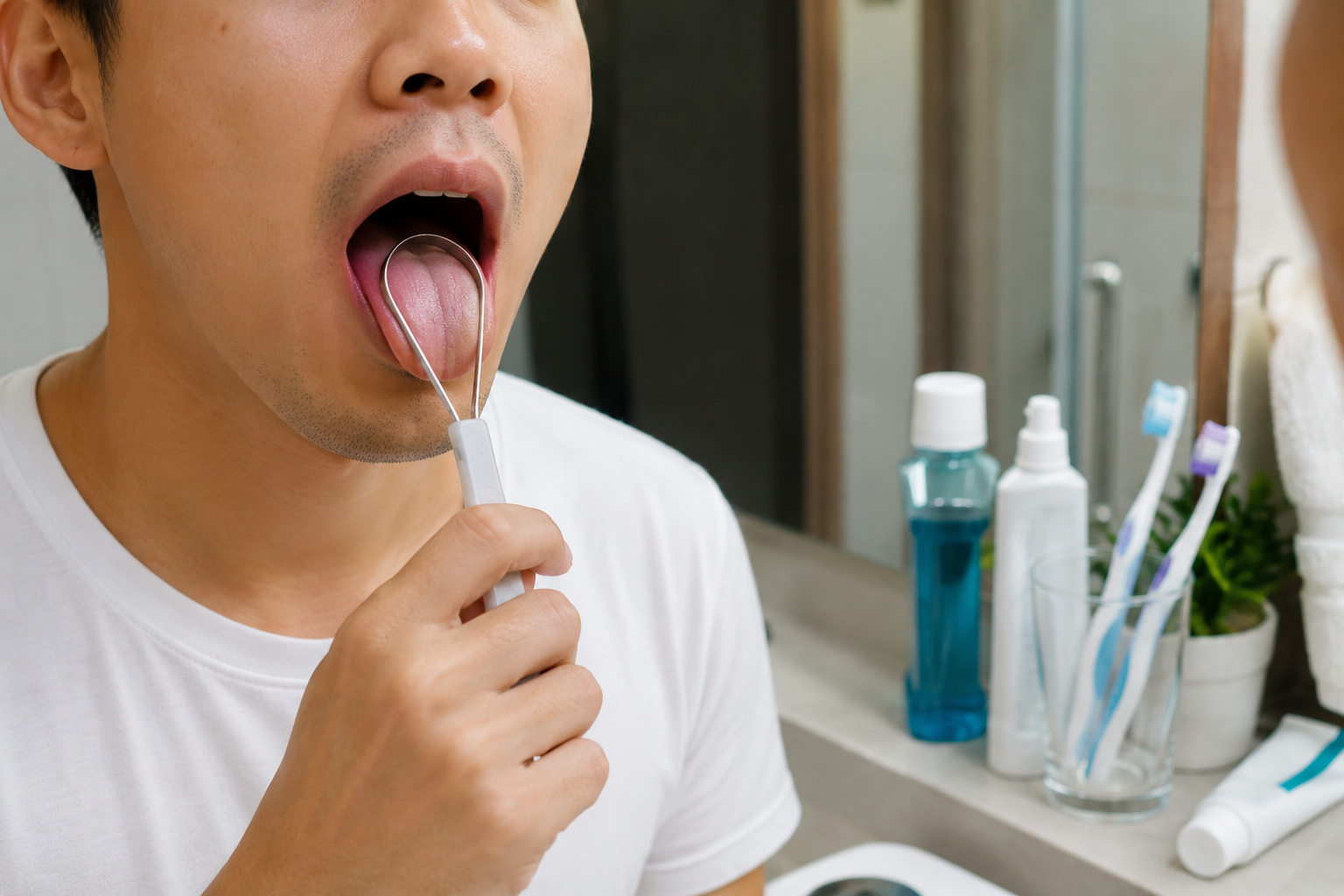
A simple tongue-cleaning routine may help reduce buildup without making the mouth feel irritated.Place the scraper or toothbrush as far back as comfortably possible without triggering strong gagging.
Then gently move forward.
Usually: 2–4 gentle passes are enough, rinsing between passes helps, excessive force is unnecessary
Some people naturally produce more tongue coating than others.
That can happen more often in:
- smokers
- coffee drinkers
- people with dry mouth
- people who breathe through their mouth at night
This does not automatically mean something is seriously wrong.
Rinse and Stop There
A surprising number of people keep scraping long after the tongue already feels clean.
Usually, there is no need.
After rinsing: clean the scraper or toothbrush, drink some water, continue normal oral hygiene habits
For most people, the mouth should feel fresher — not painfully “stripped clean.”
Common Tongue Cleaning Mistakes
Ironically, people sometimes create irritation by trying too hard to improve oral hygiene.
Scrubbing Too Aggressively
This is probably the most common mistake.
The tongue is not meant to be cleaned like a kitchen surface.
Overcleaning may lead to: soreness, irritation, redness, sensitivity while eating spicy foods. Gentle cleaning is usually enough.
Cleaning Too Frequently
Some people scrape their tongue multiple times a day after every meal.
That is rarely necessary.
For most people, once daily is completely reasonable.
Trying to force the tongue to look perfectly clean at all times often creates more anxiety than actual benefit.
Ignoring the Rest of Oral Hygiene
Tongue cleaning alone cannot fix every breath problem.
This is important because many people buy tongue scrapers expecting them to solve chronic bad breath completely.
Sometimes the real issue is:
- plaque buildup
- gum inflammation
- tartar accumulation
- dry mouth
- inconsistent flossing
This is why overall oral hygiene matters more than obsessing over one part of the mouth.
You can also read:
Dry Mouth Often Makes Tongue Coating Worse
A lot of people notice heavier tongue coating when their mouth feels dry.
This is especially common: after sleeping, after coffee, during dehydration, after smoking, during long periods of mouth breathing
Saliva helps regulate bacteria naturally inside the mouth. When the mouth stays dry for long periods, buildup may become more noticeable.
Some people discover their “tongue problem” improves more from better hydration than from aggressive scraping.
Small habits often matter more than dramatic routines.
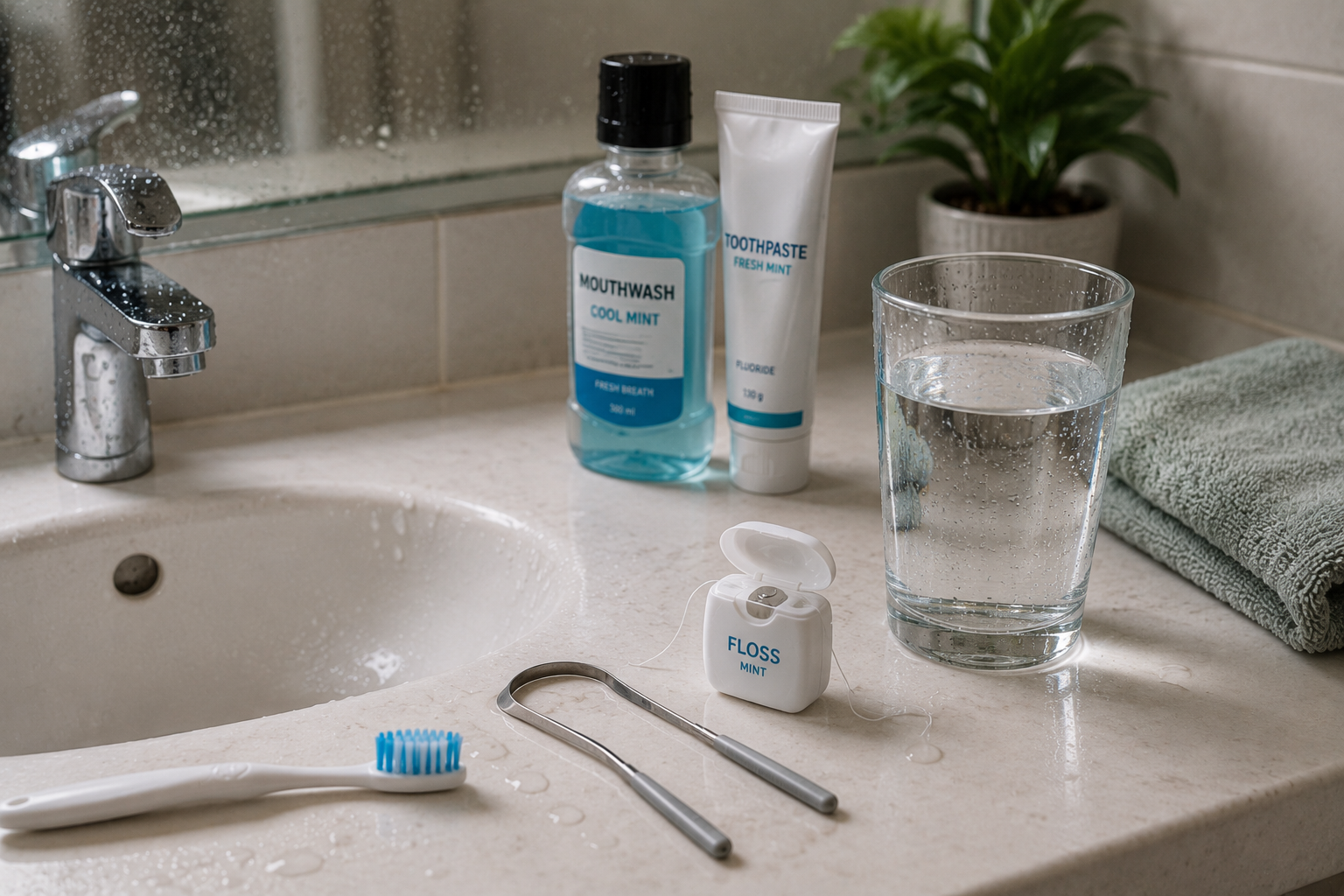
Tongue Cleaning and Oral Care Products
Some oral care products may help support fresher breath or a cleaner-feeling mouth when combined with:
- brushing
- flossing
- hydration
- gum care
- regular dental hygiene
But no product replaces consistent oral care habits completely.
People researching additional oral care support can also read:
The most helpful approach is usually realistic expectations rather than chasing instant results.
When It’s Worth Seeing a Dentist
Tongue coating itself is often harmless.
But some symptoms deserve professional attention.
Consider seeing a dentist or healthcare professional if you notice:
- persistent pain
- thick white patches
- burning sensation
- unusual sores
- swelling
- bleeding
- chronic bad breath that does not improve
Sometimes what seems like a tongue issue may actually involve gum disease, dry mouth, infections, or other oral health conditions.
Final Thoughts – How to Clean Your Tongue Properly
Most people do not need an extreme tongue-cleaning routine.
In fact, the healthiest oral care habits are often the least dramatic ones:
- gentle brushing
- regular flossing
- hydration
- gum care
- occasional tongue cleaning
- consistent routines
Medical Disclaimer
The information in this article is intended for educational and informational purposes only and should not be considered medical advice, diagnosis, or treatment.
Oral health conditions vary from person to person. Persistent bad breath, tongue irritation, swelling, pain, unusual patches, or gum problems should be evaluated by a licensed dentist or qualified healthcare professional.
This website does not provide personalized dental care recommendations or medical diagnosis.
About the Author
Bad Breath Treatment Editorial Team
The Bad Breath Treatment Editorial Team publishes educational content focused on practical oral hygiene topics including bad breath, gum care, tongue cleaning, plaque buildup, and realistic daily oral care habits.
Our goal is to make oral care information easier to understand through balanced, research-informed, and reader-friendly educational content written for everyday readers rather than dental professionals.
We focus on practical routines, preventive habits, and realistic oral hygiene guidance instead of exaggerated “instant cure” claims or fear-based marketing.
Frequently Asked Questions – How to Clean Your Tongue Properly
Should you clean your tongue every day?
For most people, gentle once-daily tongue cleaning is usually enough to help reduce buildup and support fresher breath.
Is a white tongue always unhealthy?
No. A mild tongue coating can be normal, especially in the morning. Hydration, oral hygiene habits, smoking, and dry mouth can all affect tongue appearance.
Is a tongue scraper better than a toothbrush?
Both can help. Some people prefer tongue scrapers because they remove buildup more efficiently, while others use a soft toothbrush comfortably.
Can tongue cleaning completely cure bad breath?
Not always. Bad breath may also be related to gum problems, plaque buildup, dry mouth, diet, or other oral health conditions.
Can you damage your tongue by scraping too hard?
Yes. Aggressive scraping may irritate the tongue and cause soreness or redness. Gentle cleaning is usually recommended.
Why does my tongue feel coated again after cleaning?
Tongue coating may return naturally throughout the day due to bacteria, dry mouth, food residue, coffee, smoking, or dehydration
5 Comments