
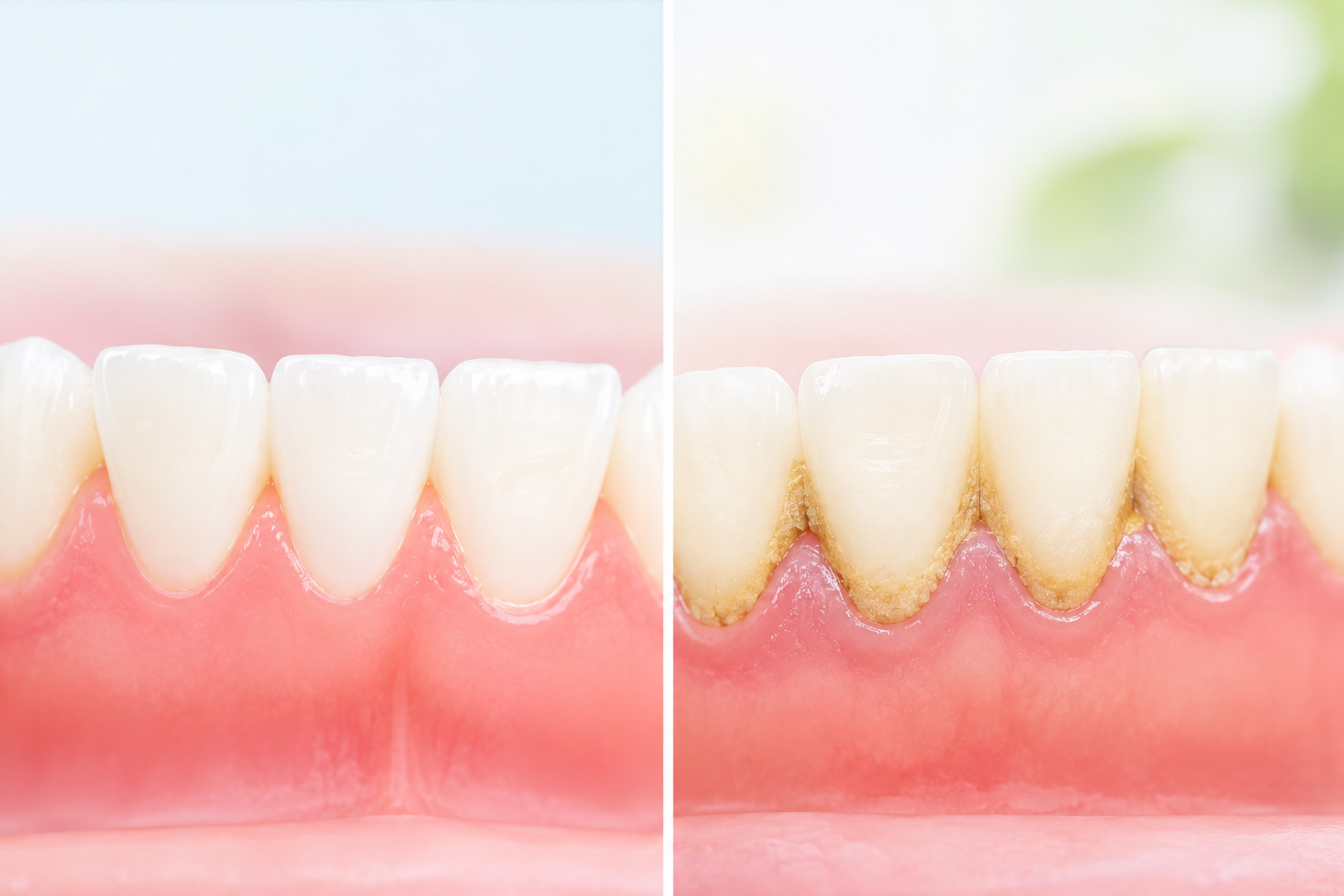
Plaque vs Tartar
Plaque vs Tartar: What Actually Happens to Your Teeth Over Time?
Plaque vs Tartar: Most people do not notice plaque right away.
It usually does not hurt. It does not always show clearly in the mirror either. For many people, the first signs are subtle — a slightly fuzzy feeling on the teeth later in the day, breath that seems unpleasant again shortly after brushing, or mild bleeding while flossing one specific area repeatedly.
Then eventually, something starts feeling rough near the gums.
That rough buildup is often tartar, and it usually began as ordinary plaque that stayed on the teeth longer than expected.
Plaque and tartar are closely connected, but they are not the same thing. Plaque forms naturally every day and can usually be removed with good oral hygiene. Tartar develops more gradually when plaque hardens into a mineralized deposit that brushing alone often cannot remove anymore.
Understanding the difference matters because both are closely linked to bad breath, gum irritation, cavities, and long-term gum problems that tend to worsen slowly rather than all at once.
What Is Plaque?
Plaque is a sticky bacterial film that constantly forms on the teeth throughout the day.
Dentists often describe it as a biofilm because it behaves like a thin layer of bacteria attached tightly to the tooth surface. It develops when bacteria combine with saliva, food particles, sugars, and proteins naturally found in the mouth.
The important thing many people do not realize is that plaque starts forming again only hours after brushing.
This is completely normal.
The problem is not that plaque exists. The problem begins when it remains undisturbed long enough for bacteria to multiply and irritate the gums.
Plaque also tends to collect in predictable places: along the gumline, between tightly spaced teeth, around back molars, behind the lower front teeth
Dental hygienists often notice that patients brush the visible front surfaces reasonably well but miss the areas closest to the gums where plaque accumulates fastest.
One reason plaque is easy to ignore is because it does not always look dramatic. Sometimes teeth still appear white while bacterial buildup is already collecting near the gums or between teeth.
Many people first notice plaque by feel rather than appearance. The teeth may start feeling slightly fuzzy by evening, especially after coffee, sugary snacks, or long periods without water.
According to the American Dental Association, plaque buildup plays a major role in both cavities and early gum inflammation.
What Is Tartar?
Tartar, also called dental calculus, is hardened plaque.
When plaque remains on the teeth long enough, minerals naturally present in saliva slowly harden that soft bacterial film into a rough deposit.
Unlike plaque, tartar cannot usually be removed effectively with normal brushing or flossing.
What surprises many people is that tartar rarely appears “all at once.” In most cases, it develops quietly from plaque that was repeatedly missed in the same small areas day after day.
Over time, those spots become rougher and easier for more bacteria to cling to.
Tartar often appears: yellow, brown, darker near the gums, especially visible behind the lower front teeth
Coffee, smoking, tea, and dry mouth can make tartar more noticeable because pigments and bacteria stick more easily to rough surfaces.
One area dentists frequently clean during appointments is the backside of the lower front teeth. Saliva glands under the tongue release minerals continuously there, which tends to accelerate tartar formation compared to other areas of the mouth.
Some people notice the buildup most clearly when bright bathroom lighting suddenly catches the lower teeth at a certain angle.
Others notice it with their tongue first — a rough edge near the gums that never quite feels smooth after brushing.
Plaque vs Tartar: The Main Difference
| Feature | Plaque | Tartar |
|---|---|---|
| Texture | Soft and sticky | Hard and rough |
| Removal | Usually removable at home | Usually requires professional cleaning |
| Appearance | Clear or pale yellow | Yellow, brown, or darker buildup |
| Main Risk | Cavities and gum irritation | Gum disease and persistent bacterial buildup |
In simple terms, plaque is the earlier stage. Tartar is what happens when plaque stays on the teeth long enough to harden.
Why Plaque and Tartar Often Cause Bad Breath
One reason bad breath becomes persistent is because plaque and tartar create protected environments where bacteria continue growing undisturbed.
These bacteria release volatile sulfur compounds — gases that produce unpleasant odors inside the mouth.
This is why brushing quickly for a few seconds often does not fully solve bad breath if plaque remains trapped near the gums, tongue, or between teeth.
Tartar can make the problem worse because rough surfaces hold bacteria more easily than smooth enamel.
Dental professionals commonly see patients who brush regularly but still struggle with chronic bad breath because plaque is repeatedly left behind in difficult areas.
When tartar extends slightly below the gumline, the environment becomes even harder to clean properly at home. Bacteria near irritated gums may continue producing odor throughout the day even after brushing.
Dry mouth can also make this worse because saliva normally helps control bacterial activity.
Some early gum-related warning signs connected to plaque buildup are discussed further in:
Signs of Unhealthy Gums
How Dentists Remove Tartar
Once tartar hardens onto the teeth, brushing alone is usually no longer enough to remove it safely.
Dentists and dental hygienists use a process called scaling to break apart hardened deposits.
Modern cleanings often involve ultrasonic instruments that vibrate gently while spraying water to loosen buildup. Smaller hand tools are then used around tighter areas near the gums.
Many people are surprised by how smooth their teeth feel afterward — especially behind the lower front teeth where tartar commonly accumulates unnoticed.
Some patients also notice their breath feels cleaner after a professional cleaning because bacterial buildup around the gums has been reduced significantly.
Trying to scrape tartar aggressively at home using sharp metal tools bought online can damage enamel or irritate gum tissue if done incorrectly.
Professional cleaning is usually much safer, especially when tartar has already started extending below the gumline.
Daily Habits That Help Prevent Plaque Buildup
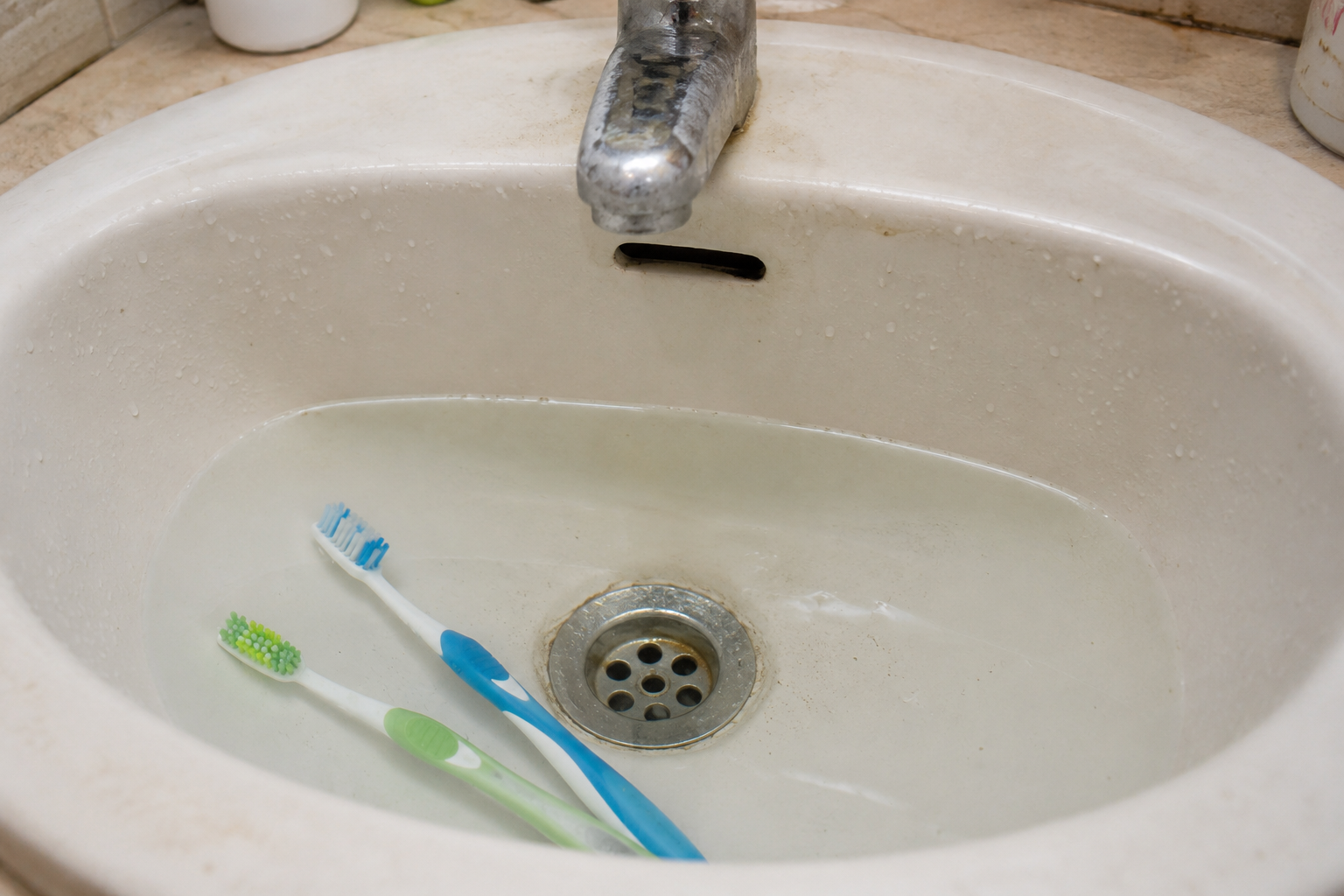
Preventing plaque is usually more about consistency than intensity.
Aggressive brushing once in a while matters less than smaller habits repeated every day.
Brush More Carefully Near the Gumline
A very common mistake is focusing mainly on the center of the teeth while barely brushing near the gums.
Plaque accumulates fastest where the teeth and gums meet.
Even brushing for an extra few seconds along the gumline can make a noticeable difference over time.
People who rush brushing often miss the same small areas repeatedly without realizing it.
Flossing Helps More Than Many People Expect
Even thorough brushing leaves plaque trapped between teeth.
Dental hygienists frequently notice heavier tartar buildup in patients who brush consistently but floss only occasionally.
One misconception is that bleeding during flossing means flossing should stop. In reality, mild bleeding is often a sign the gums are already irritated by plaque buildup.
When flossing becomes more consistent, that bleeding often improves gradually.
People who floss regularly also tend to notice fresher breath because bacteria between teeth are disrupted more effectively.
Dry Mouth Can Make Plaque Worse
Saliva naturally helps control bacteria and wash away debris inside the mouth.
When the mouth stays dry for long periods — especially overnight — plaque tends to accumulate faster.
This is one reason morning breath can become noticeably worse after sleeping with an open mouth, snoring, dehydration, or certain medications that reduce saliva flow.
Hydration, tongue cleaning, saliva flow, and gum health all influence bacterial buildup more than many people realize.
Some practical routines that support healthier gums and fresher breath are explained further in:
Daily Gum Care Habits
Can Certain Oral Care Products Help?
Some people use antibacterial oral care products as part of their routine when dealing with recurring bad breath or irritated gums.
Products designed to support the gumline may help reduce bacterial buildup when combined with: brushing, flossing, tongue cleaning, hydration, regular dental cleanings
The important thing is avoiding the expectation that one product alone will completely solve plaque or tartar problems overnight.
Long-term oral health usually improves through repeated daily habits rather than quick fixes.
For readers interested in gum-focused oral care approaches, these guides may also be useful:
When Plaque Becomes a Bigger Problem
Plaque buildup is extremely common, but problems can slowly become more serious when irritation continues for months or years.
The difficult part is that gum disease often progresses quietly in the beginning.
Symptoms people commonly ignore include:
- slight bleeding while flossing
- persistent bad breath
- tenderness near the gums
- gums that appear slightly swollen
- recurring buildup in the same areas
- gums slowly pulling away from teeth
Because these changes often happen gradually, many people adapt to them without realizing the gums are becoming increasingly irritated.
Dentists look closely at plaque and tartar not only because of cavities, but because chronic bacterial buildup near the gums can eventually affect deeper supporting tissues around the teeth.
Additional warning signs connected to unhealthy gums are explained further here:
Signs of Unhealthy Gums

Final Thoughts – Plaque vs Tartar
Plaque forms naturally on teeth every day, and nearly everyone experiences it to some degree.
The important difference is whether it is removed consistently before it hardens into tartar.
In many cases, the smaller habits matter most: brushing carefully near the gums, flossing regularly, staying hydrated, paying attention to bleeding gums, getting professional cleanings when needed
Many people focus heavily on whitening products or fast cosmetic results while overlooking the daily habits that actually control bacterial buildup long term.
Most tartar problems do not appear suddenly. They usually develop quietly through small areas repeatedly missed over time.
That is why consistent maintenance often matters far more than occasional “deep cleaning” efforts done only once in a while.
Frequently Asked Questions – Plaque vs Tartar
Is plaque worse than tartar?
Plaque and tartar are both harmful when left untreated, but tartar is usually harder to manage because it cannot typically be removed with brushing alone.
Plaque is the earlier stage of buildup, while tartar is hardened plaque that creates rough surfaces where more bacteria continue collecting.
Can brushing remove tartar?
Brushing can usually remove plaque before it hardens, but once tartar forms, professional dental cleaning is often necessary.
Trying to scrape tartar aggressively at home may damage enamel or irritate the gums.
How long does plaque take to turn into tartar?
Plaque can begin hardening into tartar within roughly 24 to 72 hours if it is not removed properly.
The speed varies depending on saliva minerals, diet, oral hygiene habits, smoking, and dry mouth conditions.
Why does tartar form behind the lower front teeth?
Tartar commonly forms there because saliva glands under the tongue continuously release minerals that accelerate plaque hardening in that area.
It is also a location many people unintentionally miss while brushing.
Does tartar cause bad breath?
Yes. Tartar creates rough surfaces where odor-causing bacteria continue growing near the gums and between teeth.
This bacterial buildup can contribute to persistent bad breath even after brushing.
Can flossing help prevent tartar?
Flossing helps remove plaque between teeth before it hardens into tartar.
Consistent flossing also helps reduce bacteria associated with gum irritation and unpleasant breath.
References
- American Dental Association
- Cleveland Clinic Oral Health Guide
- NIH National Institute of Dental and Craniofacial Research
About the Author Plaque vs Tartar
Bad Breath Treatment is an educational oral health website focused on plaque control, gum health awareness, bad breath prevention, and practical oral hygiene strategies supported by preventive dentistry research and evidence-based oral health references.


4 Comments