
Why Do My Gums Bleed When I Brush My Teeth?
Why Do My Gums Bleed When I Brush My Teeth?
Why Do My Gums Bleed When I Brush My Teeth?: For a lot of people, it starts with a quick glance into the sink.
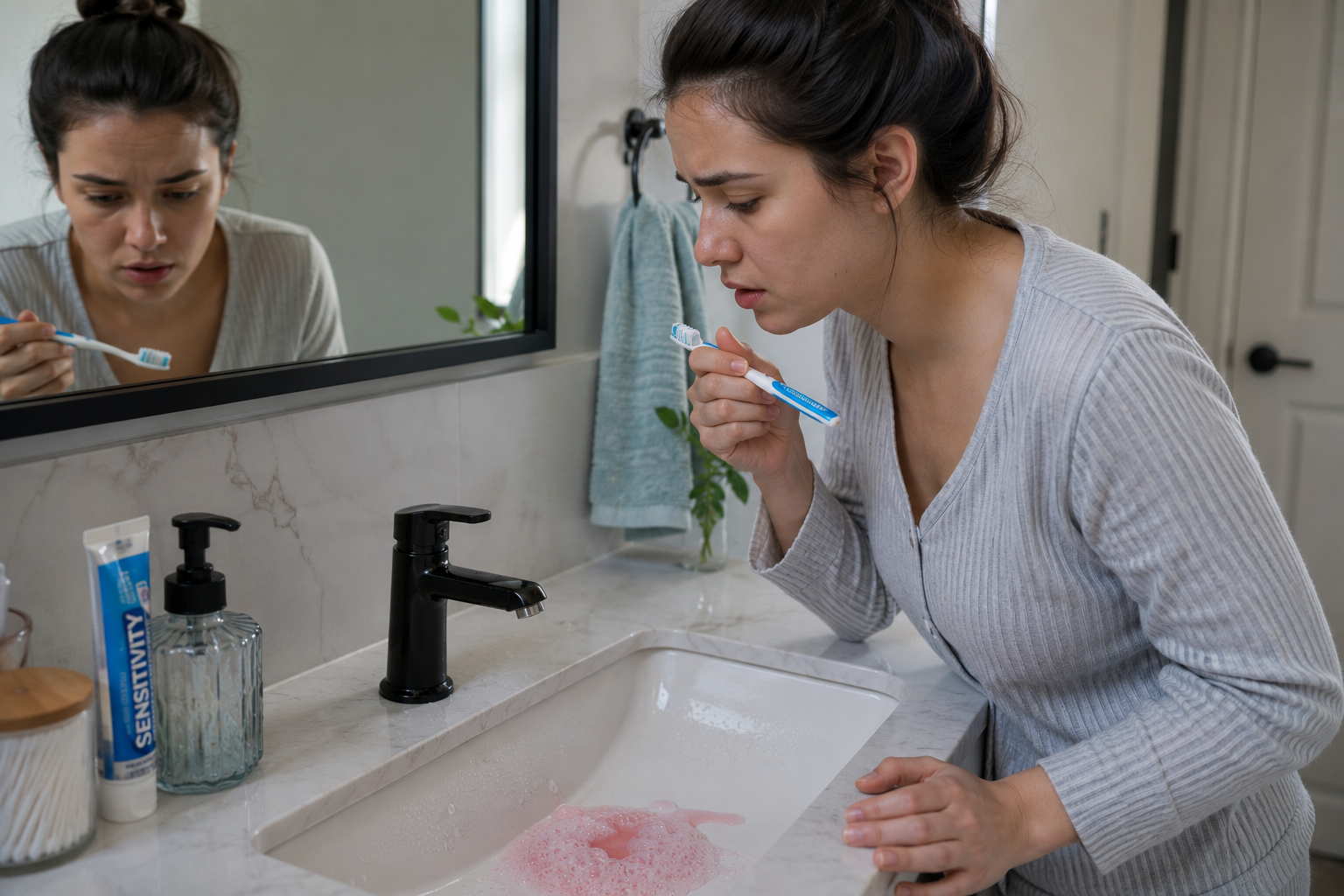
You brush normally, spit out the toothpaste foam, and suddenly notice a faint pink color mixed into the water. Sometimes it is only a small streak. Sometimes it disappears the next day and comes back a week later.
That inconsistency is exactly why many people ignore it.
They assume:
- they brushed too hard,
- the toothbrush scratched the gums,
- or the bleeding is “normal sometimes.”
But healthy gums usually do not bleed repeatedly during ordinary brushing.
In many cases, the toothbrush is not really the problem. The brushing simply exposes inflammation that has already been building quietly near the gumline.
One thing dental hygienists notice frequently is that people often wait until the gums become painful before taking the bleeding seriously. The problem is that early gum inflammation rarely begins with pain.
It usually begins with smaller signs:
- bleeding while brushing
- bad breath that returns quickly
- tenderness near one tooth
- gums that look slightly puffier than before
- floss that smells unpleasant afterward
And because those symptoms develop gradually, they are easy to normalize.
Why Gums Bleed So Easily
The gums contain thousands of tiny blood vessels very close to the surface.
When plaque bacteria irritate the gum tissue, the body responds with inflammation. Blood flow increases to the area, the tissue becomes more sensitive, and the tiny capillaries bleed more easily during brushing or flossing.
What surprises many people is how little irritation it can take once the gums are inflamed.
Even gentle brushing may trigger bleeding if bacteria have been sitting near the gumline repeatedly.
According to the American Dental Association, plaque buildup is one of the most common causes of gingivitis, the earliest stage of gum inflammation.
And gingivitis often develops quietly.
Many people with early gum irritation say things like: It doesn’t hurt. It just bleeds sometimes.”
That is actually a very common pattern.
The Toothbrush Usually Reveals the Problem — It Does Not Create It
People naturally blame the toothbrush first.
Especially if: they recently switched toothbrushes, started using an electric toothbrush, or brushed more aggressively than usual.
But in many mild cases, the toothbrush is only exposing areas where plaque bacteria have already irritated the gums.
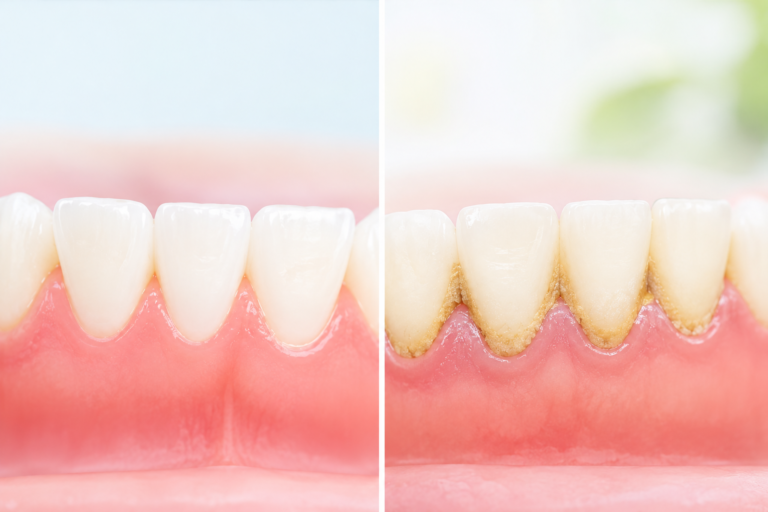
Plaque is a sticky bacterial film that forms constantly on the teeth. If it is not removed consistently near the gumline, the bacteria begin affecting the surrounding tissue.
The frustrating part is that plaque near the gums is not always obvious in the mirror.
A person may think: “My teeth look clean.”
while inflammation is already beginning between the teeth or near the gumline itself.
Why Bleeding Often Happens in the Same Area Repeatedly
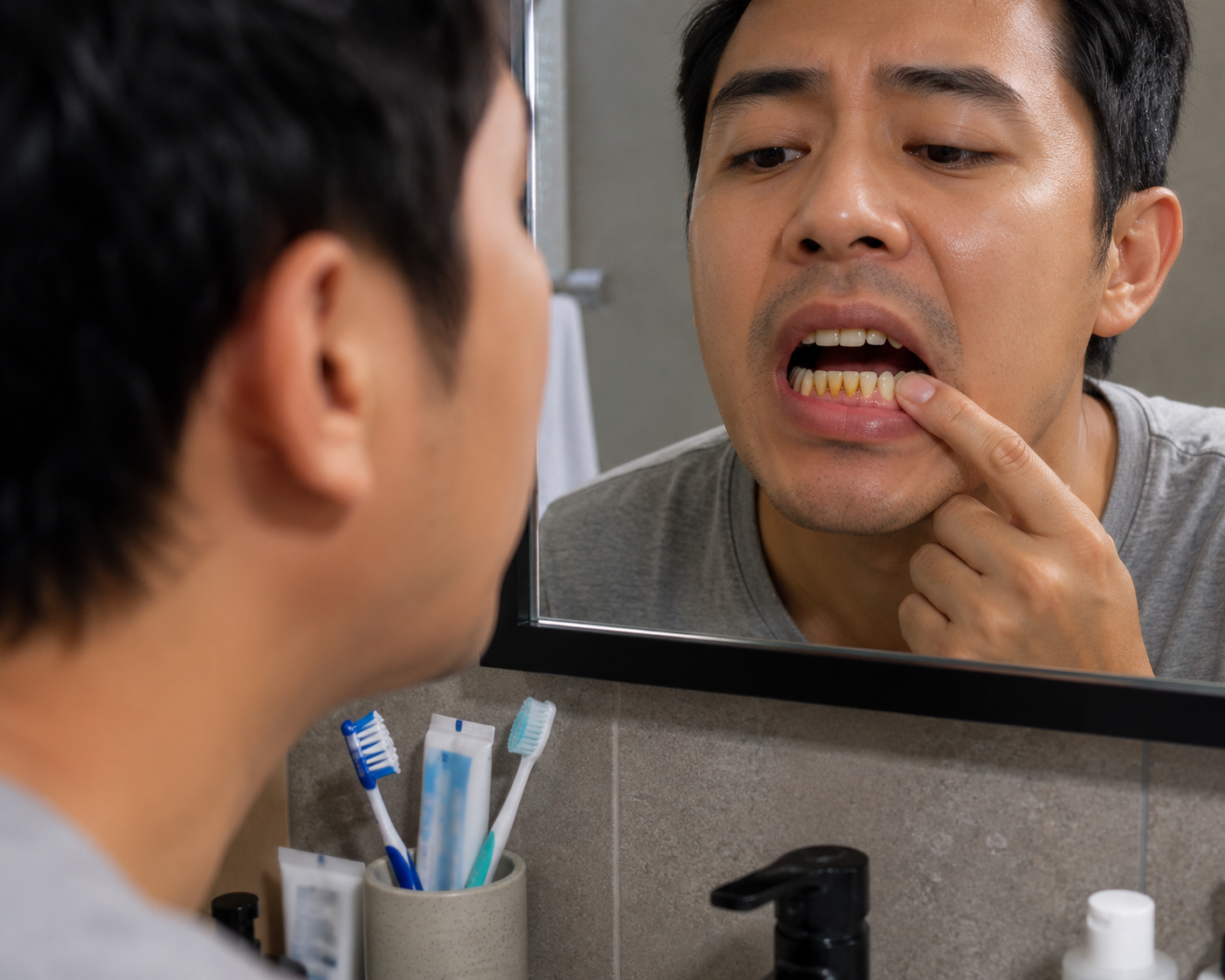
A lot of people notice the bleeding comes from one specific spot over and over again.
Usually that area is: harder to reach, trapping plaque between teeth, near tartar buildup, or being missed during brushing.
Dental hygienists commonly notice heavier plaque buildup near the lower front teeth and between back molars because those areas are easy to rush during daily brushing.
Some people also unconsciously avoid brushing sensitive areas thoroughly once the gums begin bleeding, which allows even more plaque to remain there.
Why the Blood Sometimes Looks Worse Than It Really Is
Toothpaste foam can make small amounts of blood look dramatic.
A tiny amount of bleeding mixes quickly with saliva and white toothpaste foam, creating bright pink water in the sink that looks much heavier than it actually is.
This is one reason people often panic the first time they notice it.
At the same time, repeated bleeding still should not be ignored simply because the amount appears small.
Healthy gums generally should not bleed regularly during normal brushing.
Bleeding After Restarting Flossing Is Extremely Common
This is one of the most misunderstood parts of oral hygiene.
Someone stops flossing for weeks or months, starts again, and suddenly the gums bleed immediately.
The first reaction is often: “Flossing is hurting my gums.”
But in many mild cases, the opposite is true.
The gums were already inflamed from plaque sitting between the teeth. Once floss finally disrupts that buildup, the irritated tissue bleeds more easily at first.
Dental professionals see this pattern constantly.
With gentle and consistent flossing, mild bleeding often improves gradually over time.
Why Floss Sometimes Smells Bad in Bleeding Areas
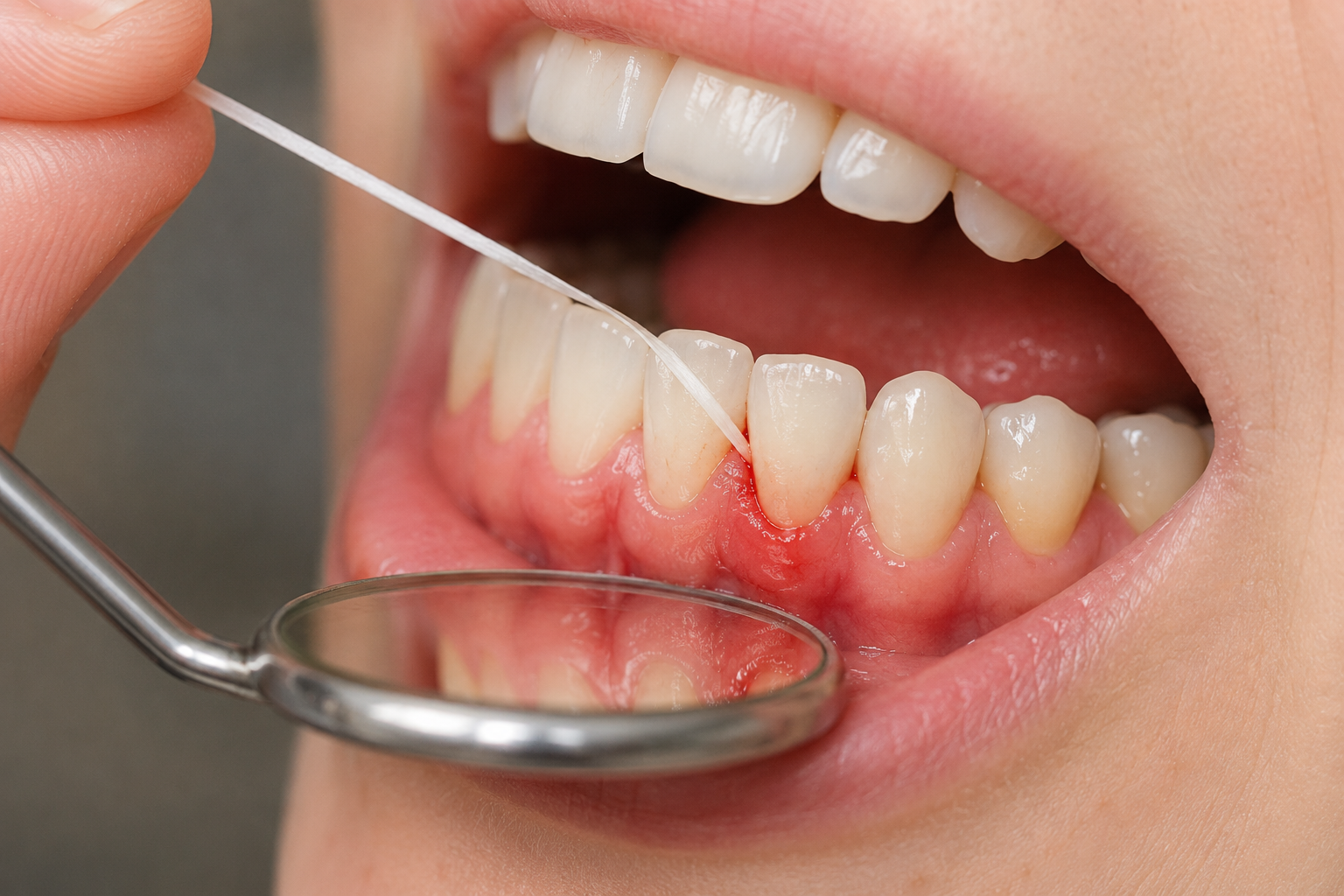
Some people notice a sour or unpleasant smell on floss taken from certain teeth.
That odor is commonly associated with bacteria trapped between the teeth and near irritated gums.
These bacteria release sulfur compounds linked to bad breath and gum inflammation.
It is also one reason bleeding gums and chronic bad breath frequently appear together.
More about bacterial buildup and tartar formation is explained here:
Plaque vs Tartar
Aggressive Brushing Can Make Inflamed Gums Worse
Although plaque is usually the main issue, brushing technique still matters.
Some people scrub their teeth very forcefully because they believe stronger brushing removes plaque better.
Over time, repeated pressure may: irritate gum tissue, increase sensitivity, contribute to recession, and worsen already inflamed areas.
Ironically, people who care deeply about oral hygiene sometimes brush too aggressively without realizing it.
Signs You May Be Brushing Too Hard
Some subtle clues include:
- toothbrush bristles spreading outward quickly
- soreness immediately after brushing
- sensitivity near the roots
- notches near the gumline
- gums that feel “raw” afterward
Most dentists now recommend soft-bristled toothbrushes because they clean effectively while being gentler on gum tissue.
Dry Mouth Changes the Entire Environment Inside the Mouth
Some people notice their gums bleed more: late at night, first thing in the morning, or during periods of dry mouth.
This is not random.
Saliva plays a major role in controlling bacteria inside the mouth. When saliva flow decreases, plaque bacteria accumulate more easily near the gums.
The mouth naturally becomes drier during sleep, which is why morning breath and gum irritation often feel worse after waking up.
People who: snore, breathe through the mouth, smoke, sleep dehydrated, or take medications that reduce saliva
often notice faster plaque buildup and more persistent gum irritation.
The Cleveland Clinic notes that dry mouth can increase oral health problems because saliva helps regulate bacterial activity and protect oral tissues.
Stress Can Affect the Gums More Than People Expect
One thing many people never connect to gum bleeding is stress.
But stressful periods often change daily habits in ways that affect the mouth: poorer sleep, dehydration, more coffee, smoking, skipped flossing, increased sugar intake, jaw clenching
Even temporary changes in routine can influence plaque buildup and gum irritation surprisingly quickly.
Some people also notice they brush harder during stressful periods without realizing it.
Smoking Can Hide Gum Problems Temporarily
This part surprises many people.
Smoking sometimes reduces visible gum bleeding because nicotine affects blood flow in the gums.
As a result, smokers may incorrectly assume: “My gums don’t bleed, so they must be healthy.”
But gum disease can still progress underneath the surface.
Dentists often consider this one of the more misleading aspects of smoking-related gum problems because inflammation may become less visually obvious while tissue damage continues developing.
When Bleeding Gums Should Not Be Ignored
Occasional mild irritation is common.
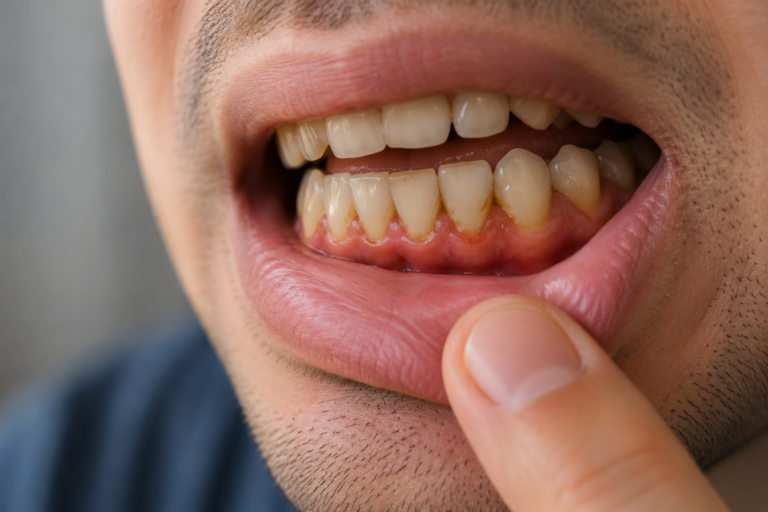
But gums that bleed repeatedly for weeks or months deserve attention, especially when bleeding appears alongside:
- swelling
- tenderness
- tartar buildup
- gum recession
- chronic bad breath
- loose teeth
- pain while chewing
One reason gum disease progresses quietly is because symptoms often come and go instead of worsening dramatically all at once.
People adapt to the symptoms gradually.
A little blood in the sink becomes part of normal routine.
That normalization is extremely common.
More early warning signs connected to unhealthy gums are explained here:
Signs of Unhealthy Gums
What Actually Helps Bleeding Gums Improve?

Most mild gum irritation improves through consistency, not intensity.
Very aggressive “deep cleaning” usually helps less than smaller habits repeated every day.
Brush More Slowly Near the Gumline
The goal is not scrubbing harder.
It is removing plaque consistently where the gums and teeth meet.
Many people rush that exact area without realizing it.
Keep Flossing Consistently
People often stop flossing because the gums bleed.
But gentle consistency is usually more helpful than avoiding the area entirely.
Many people notice the bleeding decreases gradually after several days or weeks of regular flossing.
Hydration Makes a Bigger Difference Than Most People Think
People with dry mouth often notice: sticky-feeling teeth, faster plaque buildup, stronger morning breath, recurring gum irritation
Better hydration and saliva flow can noticeably improve how the mouth feels throughout the day.
Some practical daily oral care habits are explained further here: Daily Gum Care Habits
Can Oral Care Products Help?
Some people use antibacterial oral care products as part of their routine when dealing with recurring gum irritation or persistent bad breath.
Products designed to support the gumline may help reduce bacterial buildup when combined with: brushing, flossing, hydration, tongue cleaning, regular professional cleanings
The important thing is avoiding the expectation that one product alone will completely solve gum bleeding overnight.
Long-term improvement usually comes from reducing bacterial buildup consistently over time.
For readers interested in gum-focused oral care approaches, these guides may also help:
Final Thoughts – Why Do My Gums Bleed When I Brush My Teeth
Bleeding gums rarely appear completely out of nowhere.
Usually, the signs begin quietly: pink toothpaste foam, bleeding in one small area, tenderness while flossing, bad breath that keeps returning, gums that seem slightly swollen near certain teeth
And because the symptoms often improve temporarily before returning again, people convince themselves the problem is minor.
But healthy gums generally do not bleed repeatedly during ordinary brushing.
In many mild cases, the bleeding is an early signal that plaque bacteria and inflammation have been sitting near the gumline longer than expected.
The encouraging part is that early gum irritation often improves with: consistent plaque removal, gentler brushing, flossing, hydration, and regular dental care when needed.
And usually, the earlier those small warning signs are taken seriously, the easier the gums are to improve over time.
Frequently Asked Questions – Why Do My Gums Bleed When I Brush My Teeth
Is it normal for gums to bleed while brushing?
Occasional mild irritation can happen, but healthy gums generally should not bleed repeatedly during normal brushing.
Why do my gums bleed even though I brush every day?
Bleeding gums are often connected to plaque buildup near the gumline or between teeth, even in people who brush regularly.
Can restarting flossing cause temporary bleeding?
Yes. Inflamed gums may bleed more easily when flossing resumes after a long break, but mild irritation often improves with consistency.
Why does the blood look so dramatic in the sink?
Small amounts of blood mix quickly with saliva and toothpaste foam, making the bleeding appear heavier than it actually is.
Can stress affect gum bleeding?
Indirectly, yes. Stress can influence oral hygiene habits, dry mouth, jaw clenching, smoking, hydration, and inflammation.
Can smoking hide gum disease symptoms?
Yes. Smoking may reduce visible gum bleeding temporarily because nicotine affects blood flow in the gums, even while gum disease continues progressing underneath.
References
- American Dental Association — Gingivitis and Gum Health
- Cleveland Clinic — Bleeding Gums Causes and Treatment
- NIH National Institute of Dental and Craniofacial Research — Gum Disease Overview
- MedlinePlus — Bleeding Gums
- Harvard Health Publishing — Gum Disease and Overall Health
About the Author – Why Do My Gums Bleed When I Brush My Teeth
Bad Breath Treatment is an educational oral health website focused on plaque control, gum health awareness, bad breath prevention, and evidence-based oral hygiene education supported by preventive dentistry references and clinical oral health research.


3 Comments