
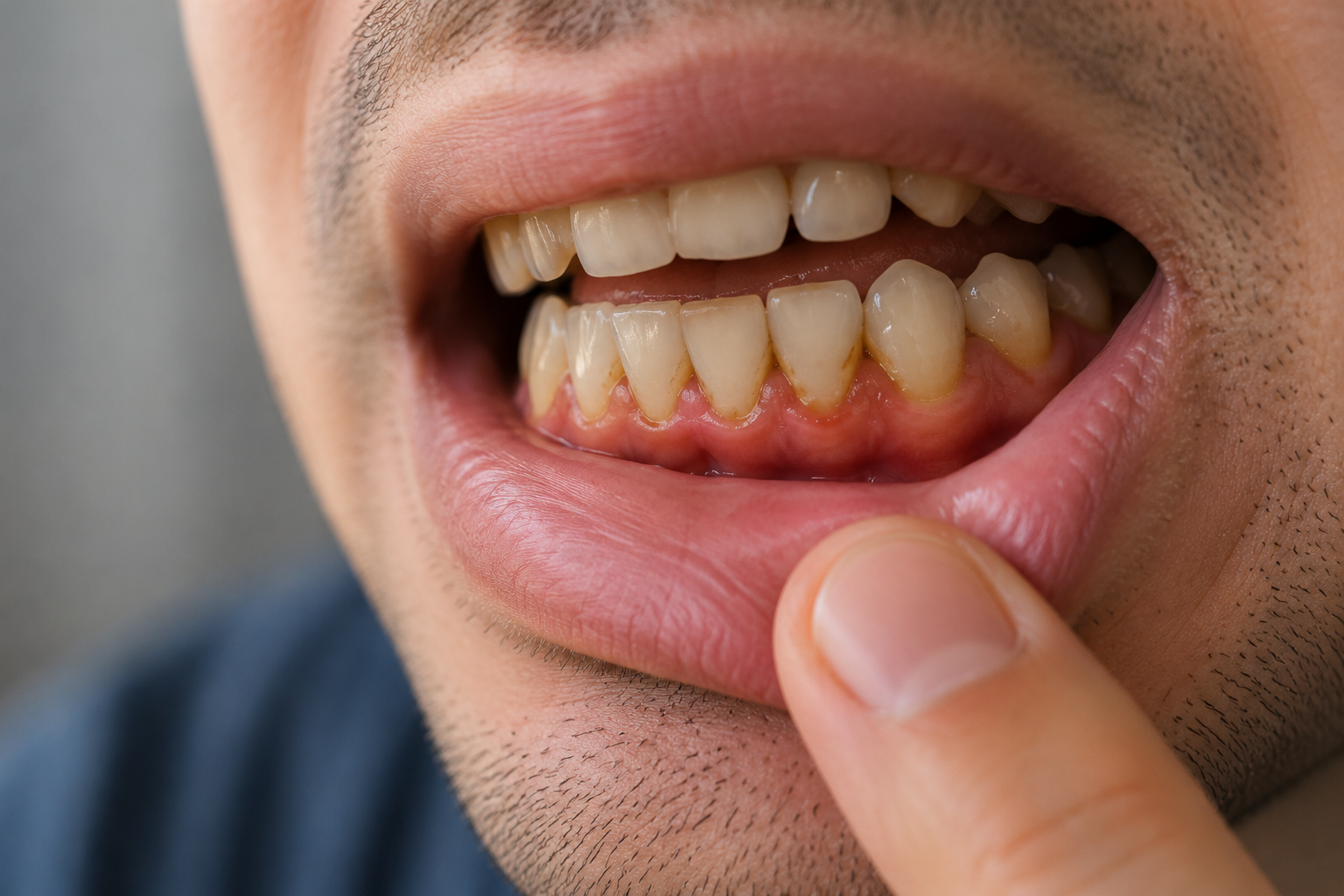
Signs of Unhealthy Gums
Signs of Unhealthy Gums: Early Warning Signs Many People Ignore
Signs of Unhealthy Gums: Most gum problems do not begin with severe pain.
For many people, the first changes are easy to dismiss. A little bleeding while flossing. Breath that smells unpleasant again an hour after brushing. Slight tenderness near one tooth that seems to come and go. Sometimes the gums simply feel “different” without an obvious reason.
Because these changes often develop slowly, people adapt to them.
It is surprisingly common for someone to live with irritated gums for months before realizing the symptoms are not temporary anymore.
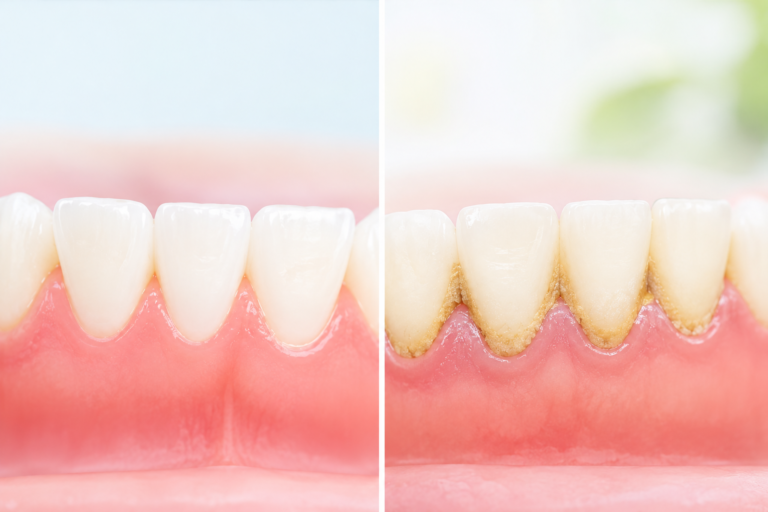
Healthy gums are usually firm, pale pink, and tight around the teeth. They generally do not bleed during normal brushing or flossing. When the gums begin reacting differently, it is often the body responding to bacterial buildup near the gumline.
And in many cases, the earlier those signs are noticed, the easier the problem is to manage.
Bleeding Gums During Brushing or Flossing

One of the earliest warning signs of unhealthy gums is bleeding.
A small streak of pink in the sink after flossing is something many people ignore at first. Some assume they brushed too hard. Others stop flossing completely because the bleeding feels uncomfortable or alarming.
Dental hygienists see this often.
Ironically, gums sometimes bleed because plaque has already been sitting between the teeth for too long — not because flossing itself is harmful.
Why Plaque Irritates the Gums
Plaque is a sticky bacterial layer that constantly forms on the teeth.
When plaque remains near the gums repeatedly, bacteria begin irritating the surrounding tissue. The gums may become slightly swollen and more sensitive, which makes bleeding easier during brushing or flossing.
This early stage of inflammation is commonly associated with gingivitis.
According to the American Dental Association, gingivitis is often reversible when plaque buildup is reduced consistently.
One thing that surprises many people is that gums do not always hurt immediately even when inflammation has already started.
Persistent Bad Breath That Keeps Returning
Bad breath is not always caused by food or poor brushing.
In many cases, recurring bad breath is connected to bacteria collecting near the gums, between teeth, or around tartar buildup that is difficult to clean properly at home.
Some people notice the odor most strongly when flossing certain teeth. Others notice a bad taste returning by late afternoon even after brushing in the morning.
Those are often signs that bacteria are continuing to accumulate somewhere inside the mouth.
Why Gum Problems and Bad Breath Are Closely Connected
Bacteria associated with plaque and gum irritation release volatile sulfur compounds — gases responsible for many unpleasant mouth odors.
If plaque remains trapped near the gums repeatedly, those bacteria continue producing odor throughout the day.
Tartar can make the problem worse because rough buildup near the gums creates even more surface area where bacteria can attach.
This is one reason mouthwash sometimes provides only temporary relief. The odor may improve briefly, but the bacterial buildup itself remains.
More about tartar and plaque formation is explained here: Plaque vs Tartar
Swollen or Puffy Gums
Healthy gums usually fit closely around the teeth.
When the gums start looking puffy, rounded, or slightly enlarged near certain areas, inflammation is often involved.
Sometimes the swelling is obvious in the mirror. Other times, people notice it more by sensation than appearance.
The gums may feel: tender while brushing, irritated while eating crunchy foods, slightly sore after waking up, uncomfortable near one specific tooth repeatedly
One subtle sign people often overlook is when floss suddenly feels tighter or more uncomfortable in areas that never used to bother them before.
Why Swelling Happens
Inflamed gums contain more fluid and increased blood flow as the body responds to bacterial irritation.
This can happen gradually enough that people stop noticing the change day to day until the gums become visibly irritated.
Gums Pulling Away From the Teeth
Gum recession is another common warning sign.
This happens when the gum tissue slowly pulls away from the teeth, exposing more of the tooth surface near the roots.
Because recession usually develops gradually, many people first notice indirect changes instead: teeth look slightly longer, cold drinks suddenly feel sharper, food catches more easily between teeth, small dark spaces appear near the gums
Some people only notice recession after seeing older photos of their smile years later.
Why Receding Gums Matter
The roots of teeth are more sensitive than enamel-covered surfaces.
When gums recede, the exposed areas may become more vulnerable to sensitivity, bacterial buildup, and irritation near the gumline.
Gum recession is often associated with: long-term plaque buildup, tartar accumulation, chronic inflammation, aggressive brushing, gum disease progression
Tartar Buildup Near the Gumline
Many people begin paying attention to their gums only after tartar becomes visible.
Tartar commonly appears: yellow, brown, rough near the gums, especially behind the lower front teeth
Unlike plaque, tartar is hardened buildup that brushing alone usually cannot remove.
One thing dentists frequently notice is that patients often underestimate how much tartar exists behind the lower front teeth because that area is difficult to see directly in the mirror.
Sometimes people first feel it with their tongue before they ever see it.
Why Tartar Makes Gum Problems Worse
Tartar creates rough surfaces where bacteria continue collecting more easily.
Over time, this bacterial buildup may keep irritating the gums even when brushing habits improve.
This is why professional dental cleanings often leave the teeth feeling dramatically smoother afterward.
More about tartar formation and plaque buildup is explained here: Plaque vs Tartar
Gums That Feel Irritated in the Morning
Some people notice gum discomfort most strongly right after waking up.
The gums may feel:
- dry
- slightly swollen
- irritated near the gumline
- unpleasant when the tongue touches certain teeth
Morning breath is also often stronger when bacterial buildup combines with dry mouth overnight.
Why Dry Mouth Affects Gum Health
Saliva helps regulate bacteria inside the mouth.
When saliva flow decreases during sleep — especially in people who snore, breathe through the mouth, or become dehydrated — plaque and bacteria can accumulate more easily.
People with dry mouth often notice:
- stronger morning breath
- faster plaque buildup
- sticky feeling teeth
- gum irritation returning more quickly
The Cleveland Clinic notes that dry mouth can contribute to oral health problems because saliva plays an important protective role inside the mouth.
Daily Habits That Support Healthier Gums

Improving gum health is usually less about finding a perfect product and more about reducing bacterial buildup consistently over time.
Small habits repeated daily often matter more than occasional aggressive cleaning.
Brush More Carefully Near the Gumline
Many people brush the visible front surfaces of the teeth well but rush the edges near the gums where plaque accumulates fastest.
Brushing slightly slower around the gumline often helps more than brushing harder.
Dental hygienists frequently notice the same missed spots appearing repeatedly during cleanings.

Floss Consistently Even if Mild Bleeding Occurs
People often stop flossing because the gums bleed.
But mild bleeding is commonly a sign the gums are already irritated from plaque between the teeth.
When flossing becomes consistent again, that irritation often improves gradually over time.
Some people also notice unpleasant odor on floss in inflamed areas — another sign bacteria have been collecting there.
Hydration Plays a Bigger Role Than Many People Realize
Saliva naturally helps wash away debris and regulate bacteria.
People who drink very little water throughout the day or experience chronic dry mouth often notice plaque accumulating faster near the gums.
Hydration, saliva flow, tongue cleaning, and brushing habits all influence gum health together.
More practical gum care habits are explained further here:
Daily Gum Care Habits
Can Certain Oral Care Products Help?
Some people use antibacterial oral care products as part of their routine when dealing with recurring bad breath or irritated gums.
Products designed to support the gumline may help reduce bacterial buildup when combined with: brushing, flossing, tongue cleaning, hydration, regular professional cleanings
The important thing is avoiding the expectation that one product alone will completely solve gum problems overnight.
Long-term improvement usually comes from consistent daily habits repeated over time.
For readers interested in gum-focused oral care approaches, these guides may also help:
When to Consider Seeing a Dentist
Mild gum irritation sometimes improves with better oral hygiene, but certain symptoms deserve professional attention.
Signs That Should Not Be Ignored
Consider professional dental care if you notice:
- bleeding that continues regularly
- worsening gum recession
- loose teeth
- heavy tartar buildup
- chronic bad breath
- pain near the gums
- swelling that does not improve
One challenge with gum disease is that symptoms are not always dramatic in the beginning.
People sometimes assume that if the gums are not painful, nothing serious is happening. But chronic inflammation can continue quietly for a long time before becoming more noticeable.
Final Thoughts – Signs of Unhealthy Gums
Unhealthy gums rarely become severe overnight.
In many cases, the earliest warning signs are small enough to ignore:
- slight bleeding while flossing
- recurring bad breath
- rough buildup near the gums
- tenderness around certain teeth
- gums that seem slightly swollen in the morning
But those smaller changes are often early signals that bacteria and inflammation are becoming more persistent.
Most gum problems become easier to manage when they are noticed early rather than after tartar buildup and irritation have progressed further.
And usually, it is the smaller daily habits — repeated consistently — that make the biggest long-term difference.
Frequently Asked Questions – Signs of Unhealthy Gums
Are bleeding gums always a sign of gum disease?
Not always. Aggressive brushing or temporary irritation can sometimes cause bleeding. However, repeated bleeding is commonly associated with plaque buildup and gum inflammation.
Can Signs of Unhealthy Gums cause bad breath?
Yes. Bacteria near irritated gums can produce sulfur compounds that contribute to persistent bad breath.
What do unhealthy gums look like?
Unhealthy gums may appear swollen, redder than normal, puffy, receding, or prone to bleeding. Healthy gums are usually firm and do not bleed easily.
Can gum problems improve naturally?
Mild gum irritation may improve when plaque buildup is reduced through consistent brushing, flossing, hydration, and professional cleaning when necessary.
Why do my gums bleed when flossing?
Bleeding during flossing is often linked to inflammation caused by plaque buildup between the teeth, especially when flossing has been inconsistent.
Is tartar connected to gum disease?
Yes. Tartar creates rough surfaces where bacteria continue collecting near the gums, increasing irritation and inflammation over time.
References
- American Dental Association
- Cleveland Clinic Oral Health Guide
- NIH National Institute of Dental and Craniofacial Research
About the Author
Bad Breath Treatment is an educational oral health website focused on gum health awareness, plaque control, bad breath prevention, and evidence-based oral hygiene education supported by preventive dentistry references and clinical oral health research.



3 Comments