

Bad Breath Causes and Prevention
Bad Breath Causes and Prevention Tips That Actually Help
Bad Breath Causes and Prevention: Some people notice bad breath immediately after waking up.
Others only become aware of it in certain moments:
during close conversations, after coffee, halfway through a long meeting, or when the mouth suddenly feels dry late in the afternoon.
In many cases, people quietly adjust their behavior before they fully understand the cause.
They drink more coffee instead of water.
Chew gum constantly.
Use strong mouthwash several times a day.
Talk less closely during conversations.
Bad breath is extremely common, but the experience is often more frustrating than people expect because the cause is not always obvious.
A lot of people assume bad breath simply means:
“not brushing well enough.”
But dentists and hygienists often see something more complicated.
Persistent odor may involve: dry mouth, tongue coating, gum irritation. trapped food debris. reduced saliva. inconsistent oral hygiene habits and certain foods and drinks
Sometimes several small issues combine together.
And interestingly, many people with ongoing breath concerns already brush their teeth regularly.
This guide looks at realistic causes of bad breath, common daily patterns that make it worse, and practical prevention habits that feel sustainable long term.
Bad Breath Often Starts With Small Daily Patterns
Most cases of mild chronic bad breath do not appear suddenly.
They slowly develop through repeated habits people barely notice anymore.
Sometimes it is: rushing through brushing before work, skipping flossing at night, drinking coffee for hours without water, breathing through the mouth during sleep, relying heavily on mint products instead of improving oral hygiene itself
These behaviors sound small individually.
Over time, they can noticeably change the smell and overall feeling of the mouth.
What Dentists Often Notice
Dental professionals frequently notice that patients focus heavily on “fresh breath products” while overlooking the actual areas where odor-causing bacteria accumulate.
Common examples include: the back of the tongue, behind the molars, between crowded teeth, irritated gumlines
Some patients brush frequently but still miss the areas where odor tends to remain longest.
Related reading:
Best Oral Hygiene Habits That Actually Make a Difference
Dry Mouth Is One of the Most Overlooked Causes
A dry mouth changes the entire environment inside the mouth.
Saliva normally helps wash away: bacteria, food particles, proteins that contribute to odor
When saliva decreases, the mouth often starts feeling: sticky, sour, coated, unusually warm and uncomfortable after talking for long periods
Real-Life Situations Where Dry Mouth Gets Worse
Many people notice stronger breath odor:
- during long meetings
- after coffee
- while fasting
- after sleeping with the mouth open
- inside air-conditioned rooms
- during stressful workdays
The pattern is surprisingly common.
Some people even notice their mouth feeling dry again only thirty minutes after brushing.
Why Mouthwash Sometimes Makes the Problem Worse
A lot of people notice the same thing:
mouthwash can make the mouth feel extremely fresh for about fifteen minutes, then the unpleasant taste slowly comes back again after coffee or lunch.
This sometimes happens because strong alcohol-based rinses temporarily create freshness while also increasing dryness afterward.
That does not mean mouthwash is bad.
It simply works better as one small part of a broader oral hygiene routine instead of acting as the main solution.
Related reading:
Why My Breath Smells After Brushing
Tongue Coating Can Quietly Hold Odor for Hours
A coated tongue is one of the most common sources of lingering bad breath.
People often describe: bitter taste, thick morning breath, sour taste after coffee, fuzzy tongue feeling and odor returning shortly after brushing
The tongue naturally traps bacteria, food debris, and dead cells throughout the day.
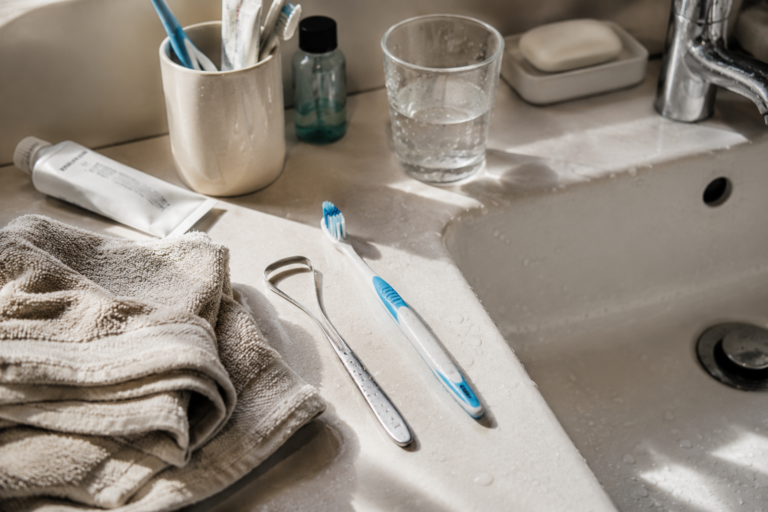
Tongue Cleaning Helps, But It Is Not a Perfect Fix
Tongue cleaning helps many people, but it does not solve every type of bad breath.
Sometimes odor may involve:
- gum disease
- tonsil stones
- sinus issues
- chronic dry mouth
- plaque buildup below the gumline
That nuance matters because many people become frustrated when one solution does not completely solve the issue.
Real-Life Friction People Rarely Talk About
A lot of people quietly dislike tongue scrapers at first.
Common reasons include: gag reflex, discomfort near the back of the tongue, irritation from scraping too hard and uncertainty about how much pressure to use
Some eventually stop cleaning the tongue consistently because the routine feels unpleasant or rushed before work.
Certain Foods Make Bad Breath Worse Than People Expect
Strong-smelling foods are obvious triggers.
But sometimes the real issue is what happens afterward.
Garlic, onions, coffee, alcohol, sugary snacks, and heavy dairy products may contribute to: dryness, stronger bacterial activity, lingering residue, thicker tongue coating
Coffee Breath Is More About Dryness Than Coffee Alone
Coffee itself is not always the entire problem.
Dentists often notice that people who sip coffee continuously throughout the day frequently develop: dry mouth, sour breath, sticky saliva, lingering odor near the tongue
This becomes worse when hydration decreases.
Related reading:
Foods That Cause Bad Breath and Make It Worse Over Time
Gum Health Affects Breath More Than Many People Realize
Gums that are irritated or inflamed may create an environment where odor-causing bacteria remain active longer.
This does not always cause pain immediately.
Some people only notice: bleeding while flossing, swollen gumlines, unpleasant taste near certain teeth and persistent odor despite brushing
Why Bleeding Gums Should Not Be Ignored
People sometimes stop flossing because their gums bleed.
But mild bleeding may actually signal plaque accumulation that needs more consistent cleaning.
Dentists commonly encourage patients to improve gum care gently rather than avoiding floss completely.
Still, ongoing bleeding or swelling should always be professionally evaluated.
Related reading:
How to Improve Gum Health
Prevention Usually Works Better Than Constantly Masking Odor
One of the most common mistakes is chasing temporary freshness all day.
People repeatedly:
- chew gum
- use strong mouthwash
- suck on mints
- brush aggressively after every meal
The mouth may feel fresh briefly, but the underlying cause often remains unchanged.
Habits That Tend to Help More Long Term
In practice, many people notice improvement from simpler habits: drinking more water, flossing before bed, cleaning the tongue gently, brushing more slowly, reducing constant snacking and attending regular dental cleanings
None of these habits feel dramatic.
But bad breath itself often develops gradually through small repeated behaviors.

A More Balanced Approach to Oral Care Products
Some people with dry-mouth-related odor prefer gentler oral care products that feel less harsh throughout the day.
Others focus more on hydration and tongue cleaning instead of repeatedly masking odor with strong mint products.
Some readers exploring broader oral-care support options occasionally look into products like
Dental Pro 7
as part of an overall oral hygiene routine rather than expecting one product to solve every cause of bad breath.
Related reading:
How to Stop Bad Breath Naturally
When Bad Breath May Need Professional Evaluation
Occasional bad breath is normal.
Persistent odor that continues despite: brushing, flossing, tongue cleaning, hydration, dietary adjustments
may deserve professional evaluation.
In some cases, ongoing odor may involve: gum disease, dental infections, tonsil stones, sinus conditions, chronic dry mouth, digestive issues
Oral health professionals often evaluate several contributing factors together rather than assuming one single cause.
That uncertainty is normal in real-world oral health care.
Final Thoughts – Bad Breath Causes and Prevention
Most people are not looking for a perfectly minty mouth every hour of the day.
Usually, they simply want to stop worrying about their breath during normal life:
conversations, meetings, coffee breaks, or quiet moments standing close to someone else.
Bad breath is often less about one dramatic cause and more about small patterns repeating over time:
dryness, inconsistent cleaning, tongue coating, gum irritation, and reduced saliva.
That is why prevention usually feels less dramatic than people expect.
Small habits repeated consistently often matter more than constantly searching for stronger products or temporary freshness.
And in many cases, the mouth starts feeling healthier before people even notice fresher breath:
less dryness, less coating, less lingering taste quietly sitting in the background.

Frequently Asked Questions – Bad Breath Causes and Prevention
What is the most common cause of bad breath?
Common causes include tongue coating, dry mouth, gum problems, trapped food particles, and poor oral hygiene habits.
Why does my breath still smell after brushing?
Bad breath may still happen because odor can come from the tongue, gums, dry mouth, or areas that are difficult to clean thoroughly.
Can dry mouth make bad breath worse?
Yes. Reduced saliva allows bacteria and odor-causing compounds to remain in the mouth longer.
Does mouthwash permanently fix bad breath?
Usually not. Mouthwash may temporarily freshen the mouth, but long-term improvement often depends on oral hygiene habits and addressing underlying causes.
When should bad breath be professionally evaluated?
Persistent bad breath that continues despite consistent oral hygiene and hydration should be evaluated by a dental professional.
About the Author — Bad Breath Treatment Editorial Team
The Bad Breath Treatment Editorial Team researches oral hygiene habits, dry mouth, gum health, tongue cleaning, and everyday causes of persistent bad breath.
Our articles combine dental references, oral health research, practical hygiene observations, and realistic daily experiences related to oral discomfort and breath concerns. Content is regularly reviewed and updated to improve clarity, usefulness, and trustworthiness for readers seeking straightforward educational information.
We focus on creating balanced oral health content that feels practical, human-centered, and non-promotional.
Medical Disclaimer
This content is intended for informational and educational purposes only and should not be considered medical advice, diagnosis, or treatment.
Persistent bad breath or oral discomfort may sometimes be associated with underlying dental or medical conditions. Always consult a licensed dentist or healthcare professional regarding ongoing symptoms, gum problems, oral pain, or health concerns.
References
American Dental Association, Mayo Clinic – Bad Breath Overview and Cleveland Clinic – Dry Mouth Information



5 Comments