
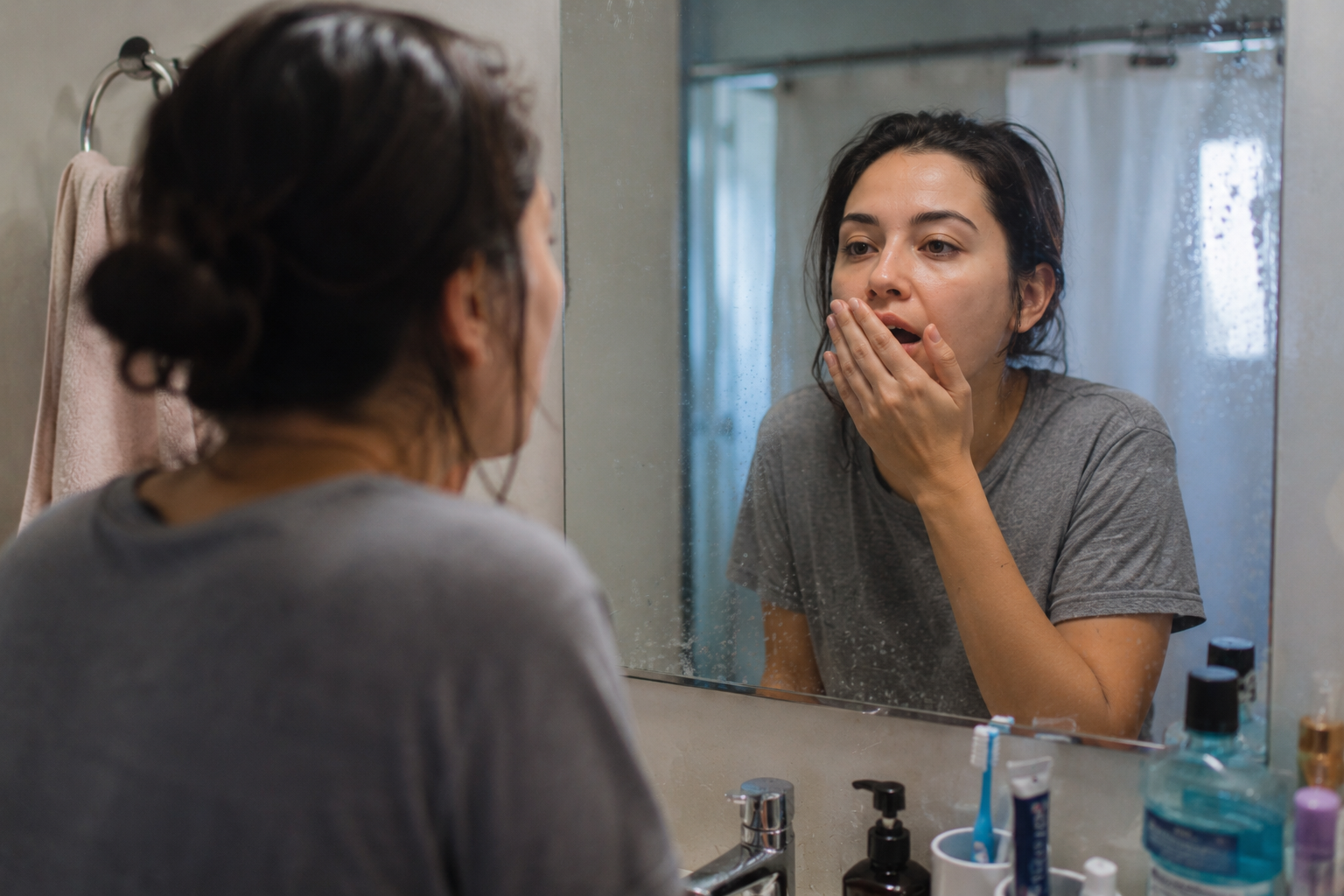
Causes Bad Breath Even After Brushing
Why Do I Still Have Bad Breath Even After Brushing?
Causes Bad Breath Even After Brushing: A lot of people assume brushing alone should completely solve bad breath.
So when unpleasant breath returns shortly after brushing — or never fully goes away — it can feel confusing and frustrating.
In reality, brushing is important, but it is only one part of overall oral hygiene.
Persistent bad breath often comes from areas brushing does not fully address, such as tongue buildup, dry mouth, trapped debris between teeth, gum irritation, or habits that slowly allow bacteria to accumulate throughout the day.
And sometimes the issue is not about brushing less, but about understanding what brushing may be missing.
Why Bad Breath Can Continue After Brushing
Many people brush quickly, rinse immediately, and assume their mouth is fully clean.
But odor-causing bacteria can remain in several areas of the mouth even after brushing.
That does not necessarily mean something is seriously wrong.
It usually means oral odor is connected to a bigger picture involving moisture, bacteria, food residue, gum condition, and daily habits.
For a broader overview of common oral odor triggers, this guide may also help:
Bad breath causes and prevention
Common Reasons Breath Still Smells After Brushing
The Tongue May Still Be Holding Bacteria
One of the most overlooked causes of bad breath is the tongue itself.
The surface of the tongue naturally contains tiny grooves where bacteria, food residue, and dead cells can collect.
Even after brushing teeth carefully, the tongue may still carry odor-producing buildup.
This is especially common toward the back of the tongue where brushing often does not reach comfortably.
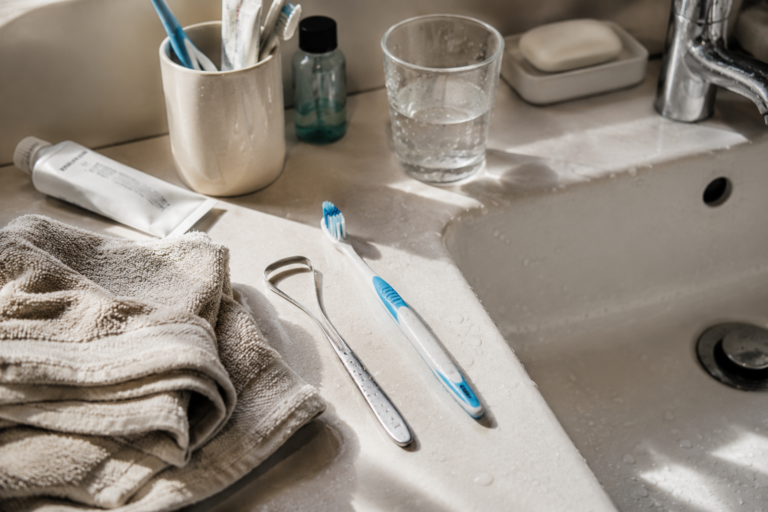
Some people notice their breath improves simply by adding gentle tongue cleaning once daily.
The goal is not aggressive scraping.
A softer, consistent approach usually feels more sustainable and realistic.

Food Particles Between Teeth Can Continue Producing Odor
Toothbrush bristles do not always remove debris trapped tightly between teeth.
Food left there for hours may gradually contribute to unpleasant smell.
This is one reason some people notice their breath smells worse later in the day even after brushing that morning.
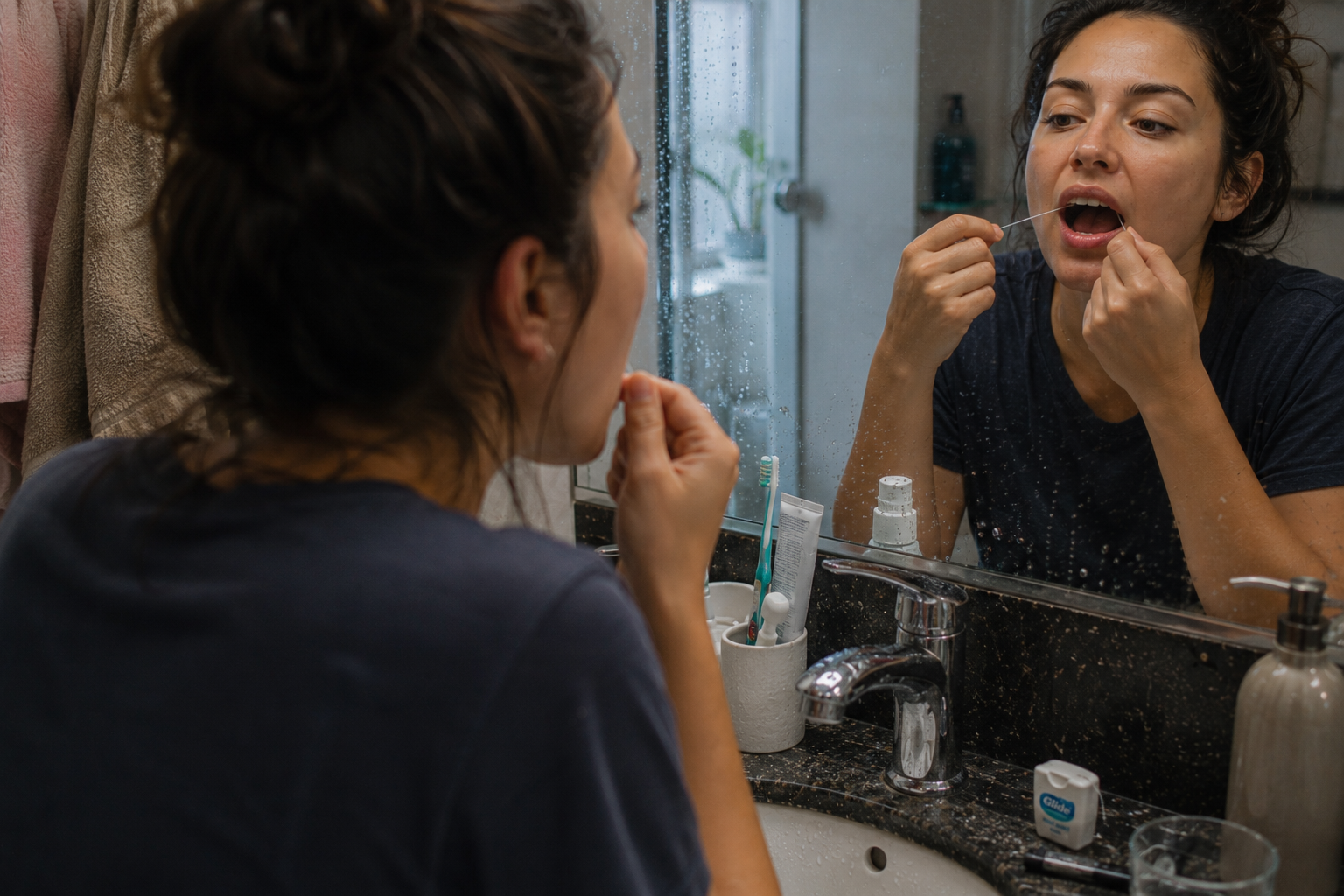
Flossing often helps because it reaches areas standard brushing misses.
People who improve flossing consistency sometimes notice fresher breath within days or weeks.
For a more complete daily care approach, this article may help:
Dry Mouth Can Make Breath Worse Quickly
Saliva plays an important role in naturally washing away bacteria and debris.
When the mouth becomes dry, odor tends to build more easily.
This explains why bad breath is often stronger:
after waking up,
after long conversations,
during stressful days,
after coffee,
or during dehydration.
Some people brush thoroughly but still experience odor because the mouth dries out again shortly afterward.
Drinking more water consistently throughout the day may help more than expected.
Mouth breathing during sleep can also contribute to stronger morning breath.
Gum Irritation May Be Contributing
Bad breath is not always connected to the teeth themselves.
Sometimes the issue comes from irritated gums where bacteria collect more easily near the gumline.
Signs that may deserve attention include:
bleeding while brushing,
puffiness near the gums,
persistent bad taste,
or tenderness near certain teeth.
If gums bleed regularly, it is worth understanding the possible reasons rather than simply brushing harder.
Related reading:
Why do my gums bleed when I brush my teeth
Certain Foods Continue Affecting Breath After Brushing
Some foods create lingering odor even after brushing.
Garlic, onions, coffee, alcohol, and heavily processed sugary foods are common examples.
In some cases, compounds from foods are absorbed into the bloodstream and released again through breathing.
This means brushing may temporarily freshen the mouth without fully removing the odor source.
Understanding which foods personally trigger stronger breath can be surprisingly useful.
This related article explains more:
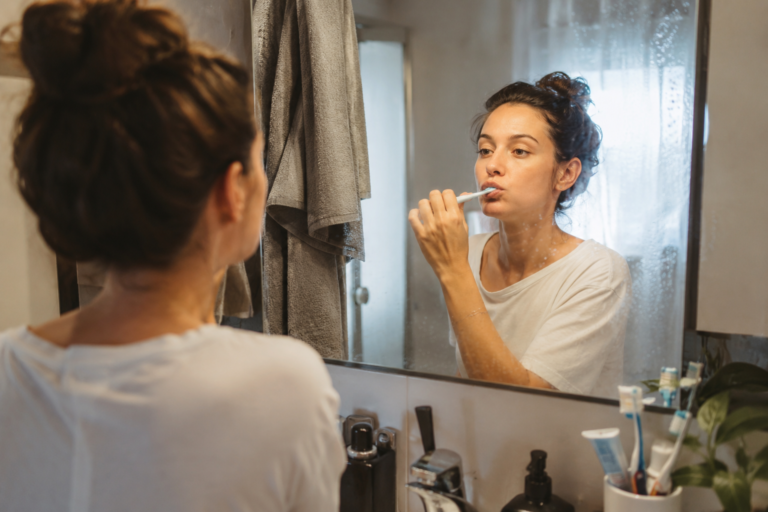
Brushing Too Quickly Often Leaves Areas Behind
Many adults brush for far less time than they think.
Fast brushing usually misses:
the back molars,
the gumline,
inner tooth surfaces,
and buildup near the edges of teeth.
Sometimes improving technique matters more than brushing more often.
A slower and gentler routine often cleans more effectively than aggressive scrubbing.
Small Habits That Quietly Make Breath Worse
Persistent bad breath is often connected to small patterns repeated every day.
Skipping Nighttime Oral Care
Nighttime brushing matters because saliva production decreases during sleep.
Leaving food residue or plaque overnight gives bacteria more time to grow.
Even people with decent morning routines sometimes underestimate the importance of evening care.
Constant Coffee Without Water
Coffee itself is not always the only problem.
The dryness that follows multiple cups throughout the day may contribute to stronger odor.
Some people notice improvement simply by drinking water alongside coffee more consistently.

Relying Only on Mouthwash
Strong mouthwash can temporarily cover odor, but masking smell is different from reducing buildup.
Some rinses may also leave the mouth feeling dry afterward.
That dryness can eventually allow odor to return faster.
What Usually Helps More Long Term
Fresh breath tends to improve when overall oral conditions improve.
That usually means focusing on consistency instead of searching for instant solutions.
A more realistic long-term routine may include:
brushing gently but thoroughly,
cleaning the tongue regularly,
flossing most evenings,
drinking more water,
and paying attention to gum health.
People dealing with recurring oral odor sometimes also explore supportive oral care products alongside their regular routine.
One example occasionally used as part of broader oral hygiene support is:
But no product fully replaces consistent daily oral hygiene habits.
For additional prevention strategies, this guide may also help:
How to prevent bad breath naturally
When Persistent Bad Breath Should Be Checked Professionally
Occasional bad breath is extremely common.
But if odor continues despite improving hygiene habits, a dentist or healthcare professional may help identify underlying causes.
Especially when symptoms include:
persistent gum bleeding,
loose teeth,
severe dry mouth,
pain while chewing,
or ongoing unpleasant taste.
Sometimes oral health issues develop gradually and are easier to manage earlier
Final Thoughts – Causes bad breath even after brushing
Bad breath after brushing does not automatically mean brushing “is not working.”
More often, it means there are additional factors involved beyond the visible tooth surfaces.
For many people, the biggest improvements come from small realistic changes:
cleaning the tongue,
flossing more consistently,
staying hydrated,
paying attention to gum health,
and slowing down rushed oral care routines.
Fresh breath usually follows healthier oral habits overall — not just stronger toothpaste or harsher mouthwash.
Frequently Asked Questions – Causes bad breath even after brushing
Why does my breath still smell even after brushing my teeth?
Possible reasons include tongue bacteria, trapped food particles, dry mouth, gum irritation, or brushing too quickly.
Can dry mouth cause bad breath after brushing?
Yes. Saliva helps naturally clean the mouth. When the mouth becomes dry, bacteria and odor may build up faster.
Does brushing the tongue help bad breath?
For many people, yes. The tongue can hold odor-causing bacteria and debris, especially toward the back.
Why is my breath worse in the morning?
Saliva production decreases during sleep, allowing bacteria to become more active overnight.
When should I see a dentist about bad breath?
If bad breath continues despite improving oral hygiene — especially alongside gum bleeding, pain, or dry mouth — professional evaluation may help identify underlying causes.
About the Author
Bad Breath Treatment Editorial Team
Bad Breath Treatment Editorial Team focuses on practical oral hygiene education, realistic gum care habits, and evidence-informed information related to bad breath and oral wellness.
Our articles are written to prioritize readability, balanced health information, and real-world daily care rather than exaggerated marketing claims. Content is reviewed for clarity and aligned with publicly available guidance from established dental and medical organizations.
Disclaimer – Causes bad breath even after brushing
This article is intended for informational and educational purposes only and should not be considered medical or dental advice. Persistent bad breath, oral pain, gum bleeding, or other ongoing symptoms should be evaluated by a licensed dental or healthcare professional.


6 Comments