

How to Prevent Bad Breath Naturally
How to Prevent Bad Breath Naturally (Without Overcomplicating Your Routine)
How to Prevent Bad Breath Naturally: Bad breath is one of those things many people quietly worry about but rarely talk about openly.
Sometimes it shows up after waking up. Sometimes after coffee. Sometimes during stressful days, long meetings, fasting, or when oral care routines become inconsistent for a few weeks.
And in many cases, people immediately search for a “miracle fix” when the real solution is usually more practical and less dramatic.
Fresh breath often comes from small daily habits repeated consistently — not aggressive products, overly complicated routines, or constant mouthwash use.
This guide explains realistic ways to help prevent bad breath naturally, based on everyday oral hygiene, hydration, food awareness, and gum health.
Why Bad Breath Happens in the First Place
Most cases of bad breath start inside the mouth.
Bacteria naturally live on the tongue, between teeth, near the gumline, and in dry areas of the mouth. As they break down food particles and debris, they can release sulfur compounds that create unpleasant odors.
Morning breath is a common example. Saliva production slows during sleep, which allows odor-causing bacteria to become more active overnight.
But persistent bad breath can also be connected to:
Inconsistent brushing or flossing, Plaque buildup near the gums, Dry mouth, Food residue on the tongue, Smoking, Low water intake, Gum irritation, Certain foods and drinks, Mouth breathing
If you want a broader explanation of common causes, this related guide may help:
Bad breath causes and prevention: https://badbreathtreatment.us/bad-breath-causes-and-prevention/
Natural Ways to Help Prevent Bad Breath
Preventing bad breath naturally is usually less about “covering odor” and more about reducing the conditions that allow odor-causing bacteria to build up.
Brush More Thoroughly — Not More Aggressively
A lot of people brush quickly and assume the job is finished in under a minute.
In reality, rushed brushing often misses:
The gumline
Back molars
The inner tooth surfaces
Areas near plaque buildup
Brushing too hard can also irritate gums without actually improving cleanliness.
A softer, slower brushing routine is usually more effective than aggressive scrubbing.
Helpful habits include:
Brushing for around two minutes
Cleaning along the gumline gently
Replacing old toothbrushes regularly
Brushing before bed consistently
If your gums bleed frequently while brushing, it may be worth understanding what causes that irritation instead of ignoring it.
Related reading:
Why do my gums bleed when I brush my teeth: https://badbreathtreatment.us/why-do-my-gums-bleed-when-i-brush-my-teeth/
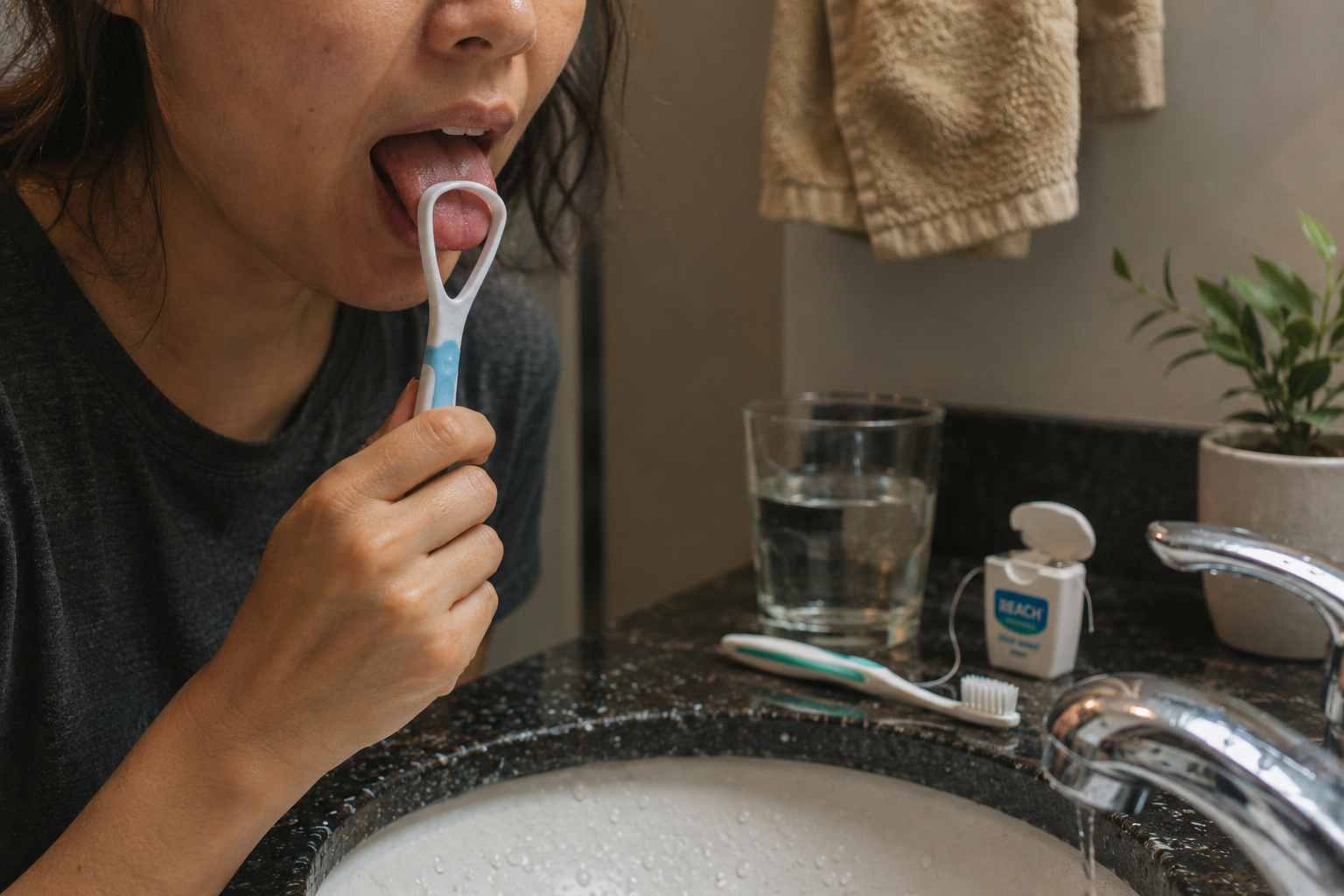
Don’t Ignore Your Tongue
Many people brush their teeth carefully but never clean their tongue.
The tongue surface can hold bacteria, food debris, and residue — especially toward the back.
That coating alone can contribute to noticeable odor.
You do not necessarily need an aggressive scraping routine. Gentle cleaning once daily is often enough for many people.
Some people prefer: A tongue scraper, A soft toothbrush, A textured brush head
The key is consistency without overdoing it.
Drink More Water Throughout the Day
Dry mouth is one of the most overlooked contributors to bad breath.
When the mouth becomes dry, bacteria are not cleared away as efficiently.
This is why breath may worsen after:
Sleeping
Long conversations
Coffee
Alcohol
Intense exercise
Air-conditioned environments
Skipping water for hours
Simple hydration habits can help more than many people expect.
Practical ideas: Keep water nearby during work hours, Drink water after coffee, Rinse lightly after meals, Avoid going long periods without fluids
People who breathe mostly through their mouth — especially during sleep — may also notice stronger morning breath.
Flossing Helps More Than Many People Realize
Bad odor often develops in places toothbrush bristles cannot fully reach.
Food particles trapped between teeth can sit there for hours or days.
Over time, that buildup can contribute to:
Unpleasant smell
Gum irritation
Plaque accumulation
Flossing does not need to be perfect to be useful.
Even improving from “rarely” to “most evenings” can make a noticeable difference for some people.
For a more complete oral hygiene routine, you may also find this helpful:
Best oral hygiene habits : https://badbreathtreatment.us/best-oral-hygiene-habits/
Pay Attention to Foods That Trigger Odor
Certain foods naturally leave stronger odors behind.
Common examples include:
Garlic
Onion
Coffee
Sugary snacks
Alcohol
Strong spices
Some foods also dry the mouth or leave residue that bacteria feed on.
This does not mean you must avoid these foods completely.
But understanding patterns can help.
For example, some people notice their breath worsens after: Multiple coffees without water, High-sugar snacks late at night, Skipping brushing after strong-smelling meals
Related reading:
Foods that cause bad breath: https://badbreathtreatment.us/foods-that-cause-bad-breath/
Focus on Gum Health, Not Just Tooth Freshness
People often focus only on “fresh-smelling breath” while ignoring gum condition.
But irritated gums can create an environment where bacteria thrive more easily.
Signs worth paying attention to include:
Bleeding during brushing
Swollen gums
Persistent bad taste
Sensitivity near the gumline
Ongoing plaque buildup
Fresh breath usually follows healthier oral conditions overall.
Trying to mask odor while ignoring gum irritation often becomes a short-term cycle.
What Usually Makes Breath Worse Over Time
Sometimes bad breath becomes persistent not because of one major issue, but because of several small habits combined together.
Constant Snacking Without Cleaning
Frequent snacking leaves more residue behind throughout the day.
Sticky foods and sugary drinks may increase bacterial activity when oral hygiene becomes inconsistent.
Overusing Strong Mouthwash
Some mouthwashes temporarily mask odor but may not address underlying buildup.
Alcohol-heavy rinses can also leave the mouth feeling dry afterward in some people.
That temporary dryness may eventually worsen odor again.
Skipping Nighttime Oral Care
The nighttime routine matters more than many realize.
During sleep, saliva flow naturally decreases.
Leaving plaque, food particles, or sugar sitting overnight creates more opportunity for odor-causing bacteria to grow.
Even a simple nighttime routine is often better than an inconsistent “perfect” routine.

A Realistic Daily Routine That Supports Fresher Breath
People often maintain routines longer when they feel practical and sustainable.
A realistic routine may look something like this:
Morning
Drink water after waking up
Brush teeth gently for two minutes
Clean the tongue lightly
Eat breakfast instead of relying only on coffee
During the Day
Stay hydrated
Rinse with water after strong-smelling meals
Avoid long periods without water
Floss if food becomes trapped
Evening
Brush thoroughly before bed
Floss consistently
Clean around the gumline carefully
Avoid sleeping immediately after sugary snacks
Some people also prefer adding supportive oral care products into their routine when dealing with recurring odor or gum discomfort.
One example people occasionally include alongside standard brushing and flossing is:
But supportive products generally work best when paired with consistent daily oral hygiene rather than treated as a standalone fix.
When Bad Breath Might Need Professional Attention
Occasional bad breath is extremely common.
But persistent odor that does not improve with better hygiene may sometimes need evaluation from a dentist or healthcare professional.
Especially if it comes with:
Gum pain
Loose teeth
Ongoing bleeding
Severe dry mouth
White coating that does not improve
Pain while chewing
Metallic taste
Sometimes oral health conditions develop gradually and become easier to manage when identified earlier.
Final Thoughts
Preventing bad breath naturally usually comes down to consistency more than intensity.
Small habits done regularly tend to matter more than dramatic “instant fresh breath” solutions.
For many people, the biggest improvements come from:
Better brushing habits
Tongue cleaning
Daily flossing
Hydration
Gum care
Reducing buildup around the mouth
And perhaps most importantly, treating oral care as part of everyday health instead of something only addressed when breath becomes embarrassing.
Frequently Asked Questions – How to prevent bad breath naturally
Can bad breath go away naturally?
In many cases, yes. Mild bad breath related to plaque buildup, dry mouth, food residue, or inconsistent oral hygiene may improve with better daily habits.
What is the fastest natural way to freshen breath?
Drinking water, brushing thoroughly, cleaning the tongue, and removing trapped food particles often help quickly. However, long-term improvement usually depends on consistent oral care habits.
Does drinking water help bad breath?
Yes. Dry mouth can make odor worse because saliva helps clean bacteria and debris naturally.
Why does my breath still smell after brushing?
Possible reasons include tongue buildup, trapped food between teeth, gum irritation, dry mouth, or inconsistent cleaning around the gumline.
Can gum problems cause bad breath?
Yes. Gum irritation and plaque accumulation may contribute to unpleasant odor if bacteria build up near the gumline.
References – How to prevent bad breath naturally
American Dental Association (oral hygiene and halitosis)
Mayo Clinic (bad breath overview)
Cleveland Clinic (dry mouth and oral bacteria)
National Institute of Dental and Craniofacial Research
About the Author
Bad Breath Treatment Editorial Team
Bad Breath Treatment Editorial Team researches practical oral hygiene habits, gum care routines, and everyday factors connected to persistent bad breath. Our content is written with a strong focus on readability, evidence-based information, and realistic daily care — not exaggerated claims or fear-based marketing.
Articles are reviewed for clarity, accuracy, and alignment with publicly available dental health guidance from established medical and oral health organizations.
Disclaimer
This article is for informational and educational purposes only and does not replace professional dental or medical advice. Persistent bad breath, gum bleeding, oral pain, or ongoing dental concerns should be evaluated by a licensed dentist or healthcare professional.


4 Comments