

Dental Pro 7 Bad Breath Support
Dental Pro 7 and the Daily Habits That May Help Improve Bad Breath
Dental Pro 7 Bad Breath Support: Most people experience bad breath at some point, especially in the morning, after coffee, during long workdays, or after eating certain foods.
For some individuals, brushing immediately solves the problem. For others, the odor keeps returning no matter how carefully they clean their teeth.
This can be frustrating because many people assume bad breath always comes from food alone. In reality, odor often develops from a combination of factors inside the mouth, including plaque buildup, tongue bacteria, dry mouth, and gum irritation.
Some people first notice the issue during conversations, while others become aware of it after tasting an unpleasant flavor in the mouth shortly after brushing.
Many individuals also spend years relying mostly on mints or strong mouthwash without realizing that long-term freshness usually depends more on improving the overall mouth environment consistently over time.
That is why routines involving hydration, tongue cleaning, flossing, gum care, and plaque control are often discussed together when addressing recurring mouth odor.
Why Bad Breath Often Keeps Returning
One reason bad breath can become persistent is because the underlying causes are sometimes overlooked.
Temporary freshness products may briefly mask odor, but they do not always reduce the bacterial buildup contributing to the problem.
According to the American Dental Association, poor oral hygiene and plaque accumulation are among the most common contributors to halitosis.
Bacteria may collect in several areas inside the mouth, including: near the gumline, between teeth, on the tongue surface, around trapped food particles, near tartar buildup
Some people notice stronger odor after several hours without water, while others become aware of it after waking up with a dry mouth.
Breath odor may also become worse during periods of: dehydration, inconsistent flossing, poor sleep, smoking, excessive coffee consumption, gum irritation
If you would like a more detailed explanation of the most common causes, this article may help:
Top Causes of Bad Breath
https://badbreathtreatment.us/top-causes-of-bad-breath/
The Often-Ignored Connection Between Gum Health and Breath Odor
Many people focus heavily on their teeth while paying very little attention to the gums.
However, irritated gums may create an environment where bacteria collect more easily around the gumline.
This is one reason some individuals continue experiencing odor even after brushing carefully.
People sometimes notice warning signs such as: bleeding during brushing, swelling near the gums, unpleasant taste shortly after cleaning, odor on dental floss, sensitivity near certain teeth
In many cases, improving gum hygiene gradually helps improve overall mouth freshness as bacterial buildup decreases.
This article explores gum-related oral hygiene in more detail:
Why Tongue Cleaning Matters More Than Many People Expect
The tongue surface can hold a surprisingly large amount of bacteria.
Even after brushing thoroughly, coating may remain on the tongue throughout the day.
This buildup may include: bacteria, food debris, dead cells, dry mouth residue
Many people are surprised during the first week of regular tongue cleaning because visible buildup often appears on the scraper or toothbrush.
For some individuals, improving tongue hygiene becomes one of the most noticeable changes in their breath routine.
Tongue bacteria may become even more noticeable when combined with dry mouth or dehydration.
Dry Mouth and Morning Breath
Morning breath is extremely common because saliva production naturally slows during sleep.
Saliva plays an important role in helping control bacterial growth inside the mouth.
When the mouth remains dry for long periods, bacteria may multiply more easily around the gums, tongue, and teeth surfaces.
The Mayo Clinic also notes that dry mouth may contribute to stronger breath odor.
Some people notice the problem becoming worse after:
- sleeping with an open mouth
- long work meetings
- dehydration
- excessive caffeine
- smoking
- poor sleep quality
Simple hydration habits throughout the day may help support a fresher mouth environment over time.
Why Mouthwash Alone Often Does Not Solve the Problem
Many people rely heavily on strong mouthwash because the fresh feeling appears immediately.
However, mint flavor alone does not always reduce the bacterial buildup contributing to recurring odor.
If plaque remains near the gumline or coating continues collecting on the tongue surface, odor may gradually return within hours.
This is one reason long-term routines usually focus more on: plaque reduction, gum hygiene, tongue cleaning, flossing consistency, hydration, reducing bacterial buildup overall
Temporary freshness and long-term oral hygiene are not always the same thing.
Daily Habits That May Help Improve Breath Freshness
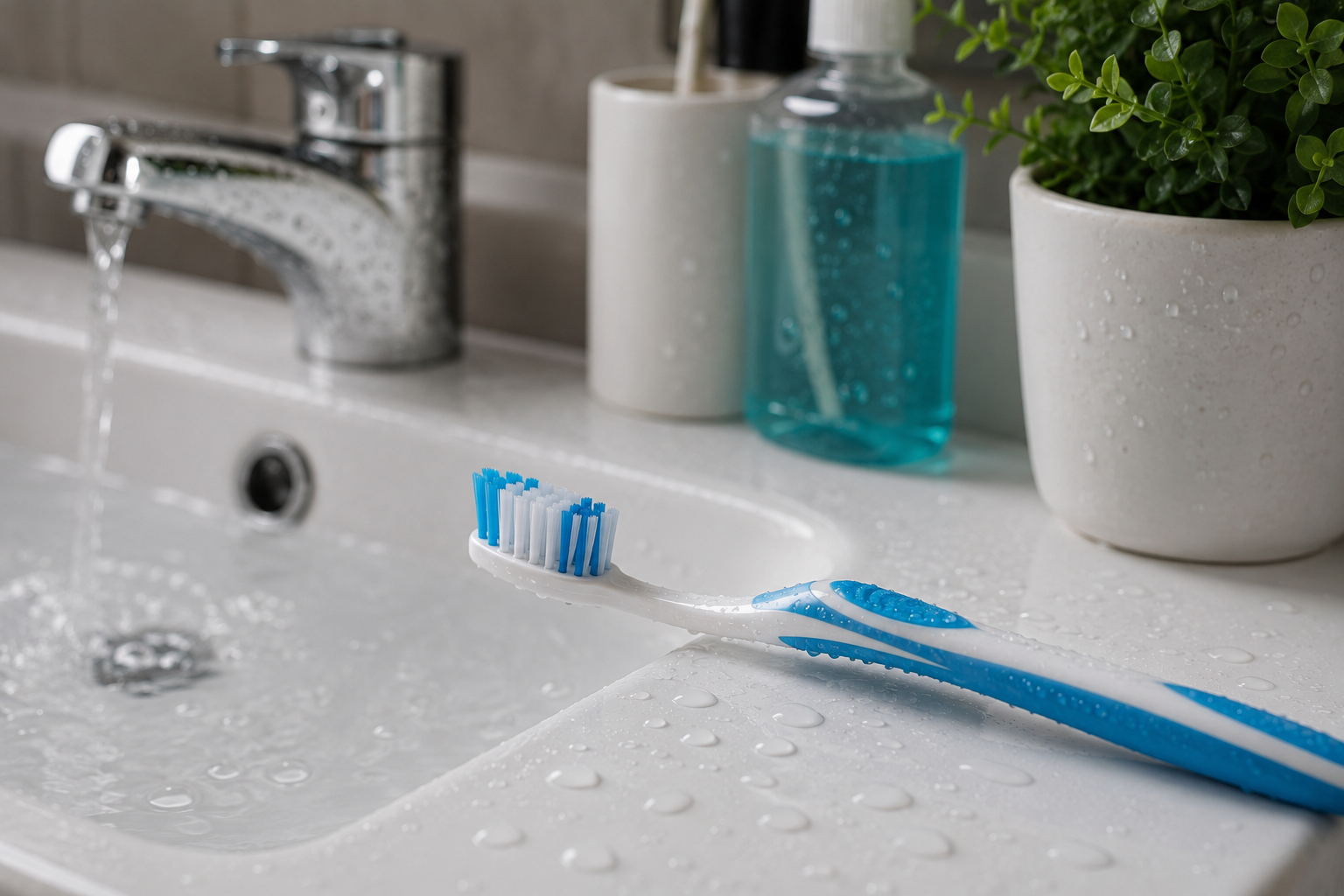
Long-term improvements usually come from consistency rather than aggressive cleaning.
Many people notice gradual changes only after improving small daily habits for several weeks.
Brush Gently and Consistently
Brushing twice daily helps reduce plaque buildup before bacteria accumulate more heavily around the gumline.
Many individuals mistakenly believe harder brushing cleans better.
In reality, aggressive brushing may irritate sensitive gums without improving overall cleanliness.
Using gentle motions with a soft-bristled toothbrush is often a more sustainable approach.
Floss Daily
Brushing alone cannot fully clean between teeth.
Food particles and bacteria often remain trapped in areas toothbrush bristles cannot easily reach.
Some people first realize buildup is contributing to odor after smelling debris on dental floss.
Daily flossing may gradually reduce this over time.
Clean the Tongue Surface
Tongue cleaning may help reduce odor-causing bacteria that remain after brushing.
Some people prefer tongue scrapers, while others gently use their toothbrush.
Consistency matters more than aggressive scraping.
Stay Hydrated Throughout the Day
Hydration supports saliva production and may help reduce dry mouth.
Many people notice fresher breath when they stop allowing the mouth to remain dry for long periods.
Simple habits such as carrying water during work or travel may help maintain mouth comfort.
Reduce Frequent Sugar Exposure
Bacteria feed on sugar.
Frequent sugary snacks and drinks may encourage bacterial accumulation throughout the day.
Reducing constant sugar exposure may help support a cleaner oral environment.
Improve Overall Gum Hygiene
Reducing plaque buildup near the gums may help lower bacterial accumulation associated with odor.
Many people notice gum improvements only after becoming more consistent with flossing and gentle brushing for several weeks.
Where Dental Pro 7 Fits Into an Oral Care Routine
Some individuals also explore oral care products designed to support cleaner daily mouth hygiene routines.
Dental Pro 7 is one example often discussed in oral care communities focused on:
- gum hygiene
- mouth cleanliness
- fresher breath routines
- plaque-related odor support
Rather than relying entirely on one product, many people combine oral care products with: consistent brushing, flossing, hydration, tongue cleaning, healthier gum care habits
Like many oral care products, results may vary depending on oral hygiene consistency, gum condition, and overall lifestyle habits.
Natural Approaches Some People Also Explore
Alongside regular oral hygiene, some people also experiment with natural approaches that may support fresher breath.
Examples commonly discussed include:
- salt water rinses
- drinking more water
- crunchy vegetables
- reducing smoking
- limiting sugary foods
- herbal rinses
Some people notice improvements simply by reducing mouth dryness and improving plaque control consistently.
Additional ideas can be found here:
Best Natural Remedies for Bad Breath
https://badbreathtreatment.us/best-natural-remedies/
When Professional Dental Care May Be Necessary
Occasional mouth odor is common.
However, persistent odor that does not improve despite consistent cleaning may sometimes require professional evaluation.
You should consider seeing a dental professional if you notice: ongoing bad breath, swollen or bleeding gums, gum recession, loose teeth, severe dry mouth, ongoing pain or sensitivity
Professional cleaning may help remove tartar buildup and identify oral health issues that home care alone may not fully address.
Long-Term Fresh Breath Usually Comes From Consistency

Many people spend years searching for instant solutions to bad breath while overlooking the daily habits contributing to bacterial buildup.
In reality, fresher breath often develops gradually through consistent oral hygiene routines maintained over time.
Small habits such as:
- flossing daily
- reducing plaque buildup
- cleaning the tongue
- improving hydration
- supporting healthier gums
- reducing mouth dryness
may gradually improve overall mouth freshness more effectively than temporary masking alone.
If you are looking for a broader guide to long-term oral hygiene habits, this article may also help:
How to Get Rid of Bad Breath Permanently
https://badbreathtreatment.us/how-to-get-rid-of-bad-breath-permanently/
About Bad Breath Treatment
Bad Breath Treatment is an educational oral hygiene website focused on helping readers better understand common causes of bad breath, gum irritation, plaque buildup, and daily mouth care habits.
The website explores practical oral hygiene topics related to: fresh breath habits, gum care, tongue cleaning, plaque management, hydration and dry mouth, healthier daily routines
The goal is to provide educational information in a clear and realistic format that is easier for everyday readers to understand.
Website:
https://badbreathtreatment.us/
Conclusion – Dental Pro 7 Bad Breath Support
Bad breath is often linked to more than just food or temporary mouth odor. In many cases, plaque buildup, tongue bacteria, dry mouth, and inconsistent gum care habits may all contribute to recurring breath problems over time.
While mouthwash and mints may provide short-term freshness, long-term improvement usually comes from maintaining a cleaner and healthier mouth environment consistently.
Simple daily habits such as:
- brushing gently twice daily
- flossing regularly
- cleaning the tongue
- staying hydrated
- reducing plaque buildup
- supporting healthier gums
may gradually help improve overall breath freshness and oral hygiene.
Some people also explore oral care products like Dental Pro 7 alongside consistent daily hygiene routines as part of their long-term mouth care approach.
For persistent symptoms such as severe bad breath, bleeding gums, or ongoing mouth discomfort, professional dental evaluation may still be necessary to identify underlying oral health problems.
FAQ – Dental Pro 7 Bad Breath Support
What are the most common causes of bad breath?
Bad breath is commonly associated with plaque buildup, tongue bacteria, dry mouth, trapped food particles, gum irritation, smoking, and poor oral hygiene habits.
Can gum problems cause bad breath?
Yes. Bacteria around irritated gums may contribute to unpleasant mouth odor, especially when plaque buildup remains near the gumline.
Why does bad breath return even after brushing?
Brushing alone may not fully remove bacteria from the tongue, between teeth, or near the gums. Dry mouth and plaque buildup may also allow odor to return quickly.
Does tongue cleaning help reduce bad breath?
Tongue cleaning may help reduce bacteria and coating buildup that contribute to mouth odor. Many people notice fresher breath after cleaning the tongue consistently.
Can dehydration make bad breath worse?
Yes. Reduced saliva from dehydration may allow bacteria to multiply more easily inside the mouth, increasing odor over time.
Does flossing improve breath freshness?
Flossing helps remove trapped food particles and plaque between teeth where toothbrushes often cannot fully clean.
Is mouthwash enough to eliminate bad breath?
Mouthwash may temporarily freshen breath, but long-term improvement usually depends on consistent oral hygiene habits and reducing bacterial buildup.
How does Dental Pro 7 Bad Breath Support an oral hygiene routine?
Some people use Dental Pro 7 alongside brushing, flossing, hydration, tongue cleaning, and gum care habits as part of a broader oral hygiene routine.
When should I see a dentist for bad breath?
You should consider professional dental care if bad breath continues despite good oral hygiene or if you also notice bleeding gums, swelling, pain, or loose teeth.
Can improving gum health help support fresher breath?
Yes. Healthier gums may help reduce bacterial buildup around the gumline, which may contribute to improved overall mouth freshness over time.
About the Author
Written by MS Adiwirya, focused on oral hygiene education, plaque management awareness, gum care habits, and realistic daily routines that may support fresher breath and healthier oral hygiene.
Research for this article includes publicly available educational guidance from organizations such as:
- American Dental Association — Oral Hygiene and Halitosis
- Mayo Clinic — Halitosis Causes and Prevention
- Cleveland Clinic — Oral Bacteria and Gum Health
- National Institute of Dental and Craniofacial Research
Content is written in an educational format intended to simplify common oral hygiene topics for general readers.
Disclaimer – Dental Pro 7 Bad Breath Support
This article is for educational purposes only and is not intended as medical advice, diagnosis, or treatment.
Persistent oral health symptoms should always be evaluated by a licensed dental professional.

10 Comments